
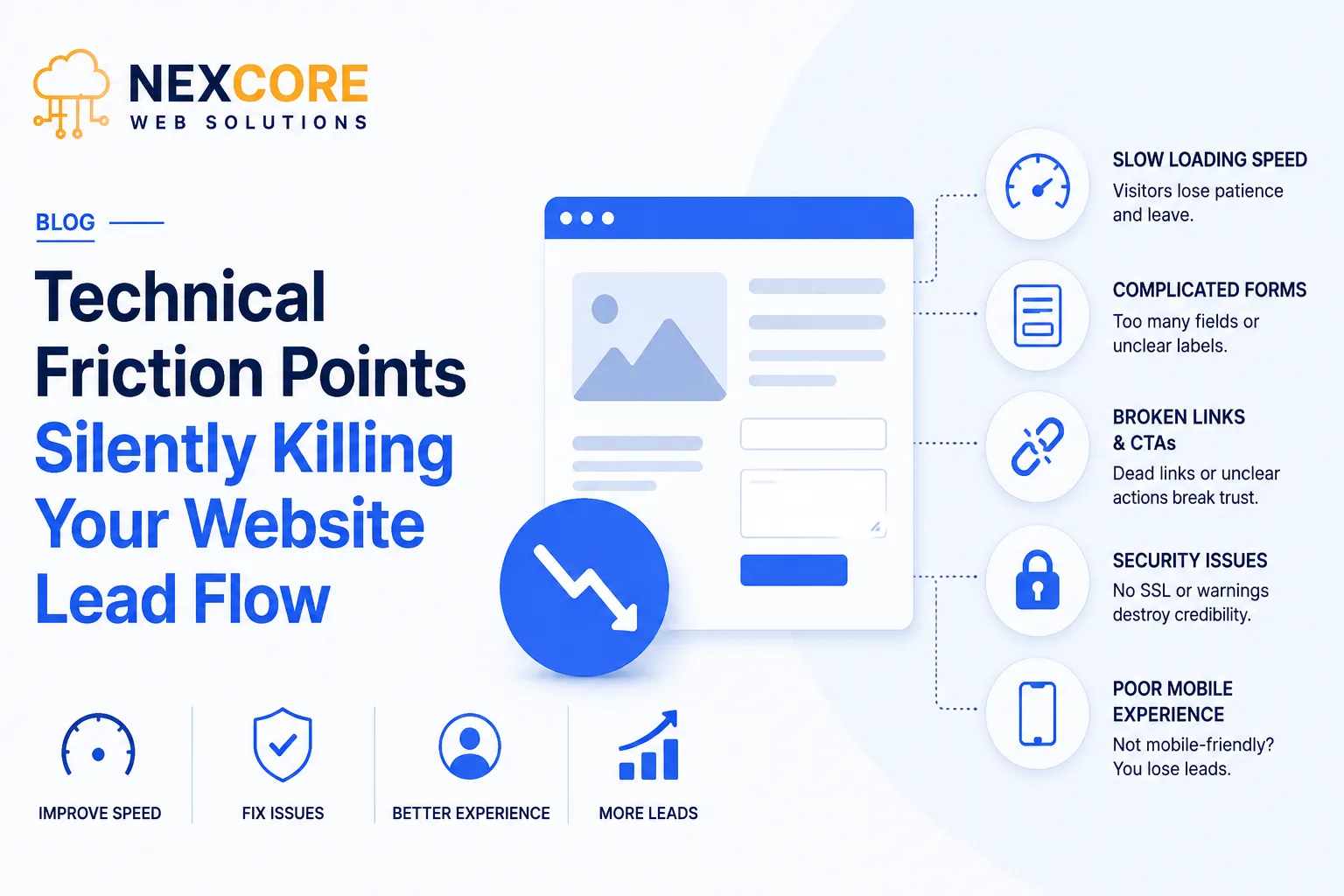
Many businesses invest heavily in website design, digital marketing, and search engine optimization but still struggle to generate qualified leads. While poor messaging or weak calls to action may contribute to the problem, technical issues often play an equally important role behind the scenes. Slow loading pages, broken forms, indexing problems, poor mobile usability, and tracking errors can quietly reduce conversions without obvious warning signs. These technical friction points discourage visitors from completing inquiries and make it harder for search engines to understand your website. Conducting a technical website audit for leads helps identify hidden obstacles that affect both user experience and conversion performance. By resolving these issues proactively, businesses can improve visitor engagement, strengthen search visibility, and create a smoother path from first visit to successful lead generation.
Why Technical Problems Reduce Lead Generation
Small Issues Create Large Business Losses
Visitors expect websites to respond instantly and function without interruptions. Even minor technical problems such as delayed page loading, broken buttons, or inconsistent navigation can create frustration that causes potential customers to leave before taking action. Unlike obvious website failures, these small issues often remain unnoticed for months while continuously reducing conversion opportunities. Regular technical reviews help uncover problems before they become expensive business challenges.
Search Visibility and User Experience Work Together
Technical performance influences more than visitor satisfaction. Search engines evaluate website speed, crawlability, mobile usability, structured data, and security when determining how efficiently pages should be indexed. Poor technical health can reduce organic visibility while simultaneously creating barriers for users. Businesses interested in understanding broader reasons websites fail to generate leads should evaluate both marketing strategy and technical website quality together.
Website Speed and Performance
Slow Loading Pages
Page speed remains one of the most significant technical factors affecting lead generation. Visitors rarely wait several seconds for important landing pages or service pages to load completely. Large images, unoptimized scripts, excessive plugins, and inefficient hosting often increase loading times unnecessarily. Faster websites improve engagement while encouraging users to continue exploring available services.
Core Web Vitals
Google’s Core Web Vitals measure loading performance, visual stability, and user interaction responsiveness. Poor scores indicate that visitors may experience layout shifts, delayed interactions, or inconsistent page rendering. Optimizing these performance metrics improves usability while strengthening technical search engine optimization. Better user experiences naturally contribute to stronger lead conversion rates.
Mobile Experience
Responsive Design
Most business websites receive substantial traffic from smartphones and tablets. If mobile visitors encounter overlapping elements, unreadable text, or difficult navigation, they are unlikely to submit inquiry forms or request quotations. Responsive layouts ensure content remains accessible across different screen sizes. Consistent mobile usability supports both customer satisfaction and lead generation.
Touch-Friendly Navigation
Interactive elements should remain easy to access using touchscreens. Buttons placed too closely together or forms requiring excessive typing discourage mobile users from completing conversions. Simplifying navigation and optimizing form interactions reduces unnecessary friction throughout the customer journey. Every improvement increases the likelihood of successful inquiries.
Technical SEO Issues
Crawlability and Indexing
Search engines cannot rank pages they cannot properly discover or interpret. Incorrect robots directives, broken internal links, duplicate content, and missing XML sitemaps often reduce indexing efficiency. Regular technical audits ensure important landing pages remain accessible to search engine crawlers. Better indexing supports stronger organic visibility for valuable business content.
Structured Data
Structured data provides additional context that helps search engines understand website content more accurately. Proper schema implementation supports enhanced search results while improving semantic clarity. Businesses should validate structured data regularly to ensure important information remains accurate and complete. Clean structured data strengthens both technical SEO and overall website quality.
Conversion Barriers
Contact Forms
Lead generation frequently depends on reliable contact forms. Forms that fail to submit, display confusing validation messages, or request excessive information often reduce inquiry completion rates. Testing every form regularly helps identify hidden technical failures before they affect potential customers. Simple, reliable forms encourage more visitors to take action.
Call-to-Action Performance
Technical issues sometimes prevent call-to-action buttons from functioning correctly across different browsers or devices. Broken links, delayed redirects, and JavaScript conflicts interrupt the conversion process even when visitor intent remains strong. Continuous testing ensures important conversion paths remain fully operational. Reliable functionality directly supports improved lead generation.
Security and Trust
HTTPS Implementation
Secure websites create confidence for both users and search engines. Modern browsers warn visitors when websites lack secure HTTPS connections, discouraging submissions through contact forms or payment pages. Maintaining valid SSL certificates protects sensitive information while improving credibility. Secure browsing experiences strengthen customer trust throughout the conversion journey.
Error Monitoring
Unexpected server errors, broken pages, and failed redirects create negative impressions that reduce user confidence. Monitoring website health continuously helps identify technical issues before they affect significant numbers of visitors. Prompt resolution minimizes downtime while preserving lead generation opportunities. Stable websites encourage visitors to continue interacting with the business.
Analytics and Measurement
Accurate Conversion Tracking
Businesses cannot improve what they cannot measure. Technical tracking issues sometimes prevent contact form submissions, phone clicks, or consultation requests from appearing in analytics reports. Verifying tracking implementation ensures marketing decisions rely on accurate performance data. Reliable measurement supports continuous optimization of lead generation campaigns.
Regular Technical Audits
A technical website audit for leads should become an ongoing business practice rather than a one-time project. As websites evolve through content updates, plugin installations, and design changes, new technical issues naturally emerge. Periodic audits identify performance, security, usability, and SEO problems before they significantly impact conversions. Preventive maintenance protects long-term business growth.
Conclusion
Technical problems often remain invisible until businesses notice declining inquiries, reduced search visibility, or lower conversion rates. Slow loading pages, mobile usability issues, broken forms, indexing problems, and inaccurate tracking silently interrupt the customer journey while reducing valuable lead opportunities. Conducting a comprehensive technical website audit for leads allows organizations to identify these hidden friction points before they become costly obstacles. Combined with strong content, effective calls to action, and continuous performance monitoring, technical optimization creates a smoother user experience that encourages visitors to engage with your business. Organizations that regularly maintain their website’s technical health build stronger digital foundations capable of supporting consistent lead generation and sustainable long-term growth.
FAQs
1. What is a technical website audit for leads?
A technical website audit for leads evaluates the performance, usability, security, SEO, and functionality of a website to identify issues that reduce lead generation. It examines factors such as page speed, mobile responsiveness, broken forms, indexing, structured data, and conversion tracking to improve both user experience and business results.
2. How does website speed affect lead generation?
Website speed directly influences visitor behavior because slow-loading pages increase bounce rates and reduce engagement. Users are less likely to complete inquiry forms or explore services if pages respond slowly. Faster websites create better user experiences, improve search performance, and increase the likelihood of converting visitors into qualified leads.
3. Why are contact forms important in a technical audit?
Contact forms are often the primary method for generating business inquiries. Technical problems such as submission failures, validation errors, broken integrations, or missing confirmation messages can prevent potential customers from contacting a business. Regular testing ensures forms function correctly across different browsers and devices.
4. How often should businesses perform a technical website audit?
Businesses should perform a technical website audit at least every few months or after significant website updates, redesigns, or platform changes. Regular audits help identify performance issues, security concerns, SEO errors, and usability problems before they negatively impact search rankings, user experience, and lead generation.
5. Can technical improvements increase website conversions?
Yes. Improving website speed, mobile usability, security, navigation, form reliability, and technical SEO removes friction that often discourages visitors from taking action. While technical optimization alone cannot guarantee more leads, it creates a stronger foundation that supports higher conversion rates and better overall website performance.




