
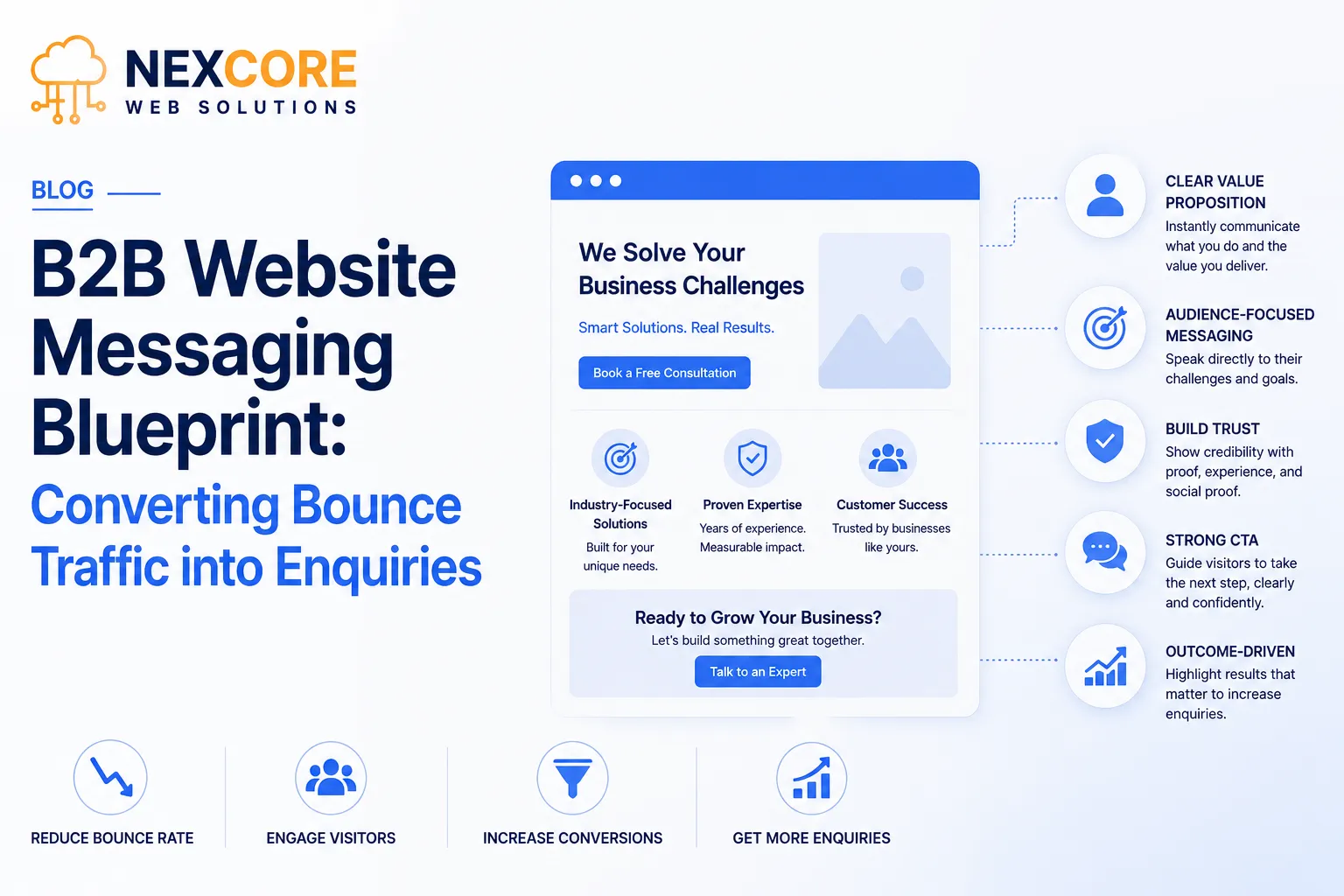
Many B2B companies successfully attract visitors through search engines, paid advertising, social media, and email campaigns, yet struggle to convert that traffic into genuine business enquiries. While technical performance and design certainly matter, website messaging often determines whether visitors stay, engage, or leave within seconds. Prospective clients need immediate clarity about what a business offers, who it serves, and why it is the right choice. Confusing headlines, generic service descriptions, and weak value propositions create uncertainty that increases bounce rates. If your b2b website not generating leads despite receiving steady traffic, ineffective messaging could be one of the biggest reasons. A structured messaging strategy helps businesses communicate value clearly, build credibility quickly, and guide potential customers toward meaningful conversations that ultimately generate qualified enquiries.
Why Messaging Matters in B2B Lead Generation
First Impressions Shape Decisions
Business buyers often evaluate several providers before contacting anyone. Within the first few seconds of visiting a website, they decide whether the content appears relevant to their needs. If headlines are vague or focus only on the company instead of customer challenges, visitors may leave before exploring further. Strong messaging immediately demonstrates relevance and encourages deeper engagement.
Visitors Need Clear Direction
Many B2B websites provide extensive information but fail to guide users toward the next logical step. Visitors should understand exactly what services are available, which industries are supported, and how they can begin a conversation. Businesses researching why your B2B website is not getting leads often discover that confusing messaging creates unnecessary friction throughout the buyer journey.
Create a Clear Value Proposition
Explain the Business Clearly
Your homepage should answer three essential questions immediately: what you do, who you help, and why customers should choose your business. Avoid generic statements that could apply to almost any company. Instead, explain your services using language that reflects real customer problems and measurable business outcomes. Clear positioning builds confidence from the beginning.
Focus on Customer Outcomes
Prospective clients care less about technical capabilities and more about the business results those capabilities deliver. Instead of listing features alone, explain how your services improve efficiency, reduce costs, increase revenue, strengthen security, or solve operational challenges. Outcome-focused messaging helps visitors visualize the value of working with your company.
Build Trust Throughout the Website
Demonstrate Credibility
Trust is essential in B2B purchasing decisions because contracts often involve significant financial investment and long-term relationships. Include customer testimonials, case studies, certifications, industry experience, and measurable achievements wherever appropriate. Evidence-based messaging reassures visitors that your business has successfully solved similar challenges before. Credibility reduces hesitation during the decision-making process.
Maintain Consistent Communication
Messaging should remain consistent across every page of the website. Service pages, landing pages, contact pages, and blog articles should reinforce the same value proposition and brand positioning. Inconsistent communication creates confusion that weakens buyer confidence. Consistency strengthens recognition while supporting a smoother customer journey.
Improve Content Structure
Write for Decision Makers
B2B buyers often include executives, procurement managers, technical specialists, and department leaders. Website content should remain professional while avoiding unnecessary technical jargon that may confuse non-specialist stakeholders. Clear language makes information easier to understand across multiple decision-makers involved in the purchasing process. Simplicity improves communication without reducing credibility.
Use Logical Page Hierarchy
Visitors should be able to scan important information quickly without reading every paragraph. Clear headings, descriptive subheadings, concise sections, and organized content improve readability while helping users locate relevant information efficiently. Well-structured content encourages visitors to continue exploring rather than abandoning the website early.
Strengthen Calls to Action
Encourage Meaningful Engagement
Calls to action should explain exactly what happens after users take the next step. Instead of generic phrases such as “Submit” or “Learn More,” use messaging that communicates value, such as requesting a consultation, scheduling a strategy discussion, or receiving a tailored proposal. Clear expectations improve enquiry completion rates.
Reduce Conversion Friction
Long forms requesting unnecessary information discourage busy business professionals from making contact. Request only essential information during the initial enquiry while making the submission process straightforward. Reducing friction increases the likelihood that interested visitors complete the conversion process. Simplicity supports stronger lead generation.
Align Messaging with Buyer Intent
Address Different Buying Stages
Not every visitor is ready to purchase immediately. Some are researching solutions, while others compare providers before making final decisions. Website messaging should support each stage by offering educational resources, service information, case studies, and consultation opportunities. Relevant content helps visitors progress naturally toward becoming qualified enquiries.
Match Search Intent
Content should reflect the questions and challenges that potential customers actively search online. When messaging aligns with user intent, visitors find immediate confirmation that they have reached the right website. Relevant communication reduces bounce rates while improving engagement. Search-focused messaging supports both SEO performance and conversion optimization.
Test and Improve Continuously
Effective messaging should evolve alongside customer expectations and market changes. Monitor bounce rates, page engagement, enquiry forms, user recordings, and conversion data to understand how visitors interact with your content. A/B testing different headlines, calls to action, and value propositions provides valuable insights into customer behavior. Continuous optimization ensures messaging remains effective as business priorities develop over time.
Conclusion
A successful B2B website does more than attract traffic—it communicates value clearly, builds trust quickly, and guides visitors toward meaningful business conversations. Strong messaging reduces confusion by explaining services, highlighting outcomes, demonstrating credibility, and simplifying the customer journey from initial visit to enquiry. If your b2b website not generating leads, reviewing your messaging strategy may uncover opportunities that technical improvements alone cannot solve. By aligning website communication with customer needs, search intent, and buyer decision-making processes, businesses create stronger digital experiences that convert more visitors into qualified enquiries. Consistent refinement ensures website messaging continues supporting long-term lead generation and sustainable business growth.
FAQs
1. Why is my B2B website not generating leads?
A B2B website may fail to generate leads because of unclear messaging, weak value propositions, confusing navigation, poor calls to action, technical issues, or content that does not address customer needs. Identifying these obstacles through regular website reviews helps improve visitor engagement and increase enquiry conversion rates.
2. How does website messaging affect conversion rates?
Website messaging influences whether visitors immediately understand what your business offers and why they should trust your company. Clear, customer-focused messaging reduces confusion, builds credibility, highlights business value, and encourages users to continue through the buyer journey instead of leaving the website without taking action.
3. What should a B2B homepage communicate first?
A B2B homepage should immediately explain what the business does, who it serves, and the value customers receive. Visitors should quickly understand the services offered, the problems solved, and the next step they should take. Strong first impressions significantly improve engagement and enquiry opportunities.
4. How can businesses improve website enquiry rates?
Businesses can improve enquiry rates by strengthening value propositions, simplifying navigation, reducing contact form complexity, adding customer proof, improving calls to action, aligning content with buyer intent, and continuously testing messaging based on user behavior and website analytics.
5. How often should B2B website messaging be reviewed?
Website messaging should be reviewed regularly, particularly after launching new services, entering new markets, updating branding, or observing declining conversion rates. Ongoing analysis of visitor behavior, search trends, and customer feedback helps ensure messaging remains relevant, persuasive, and aligned with evolving business goals.




