
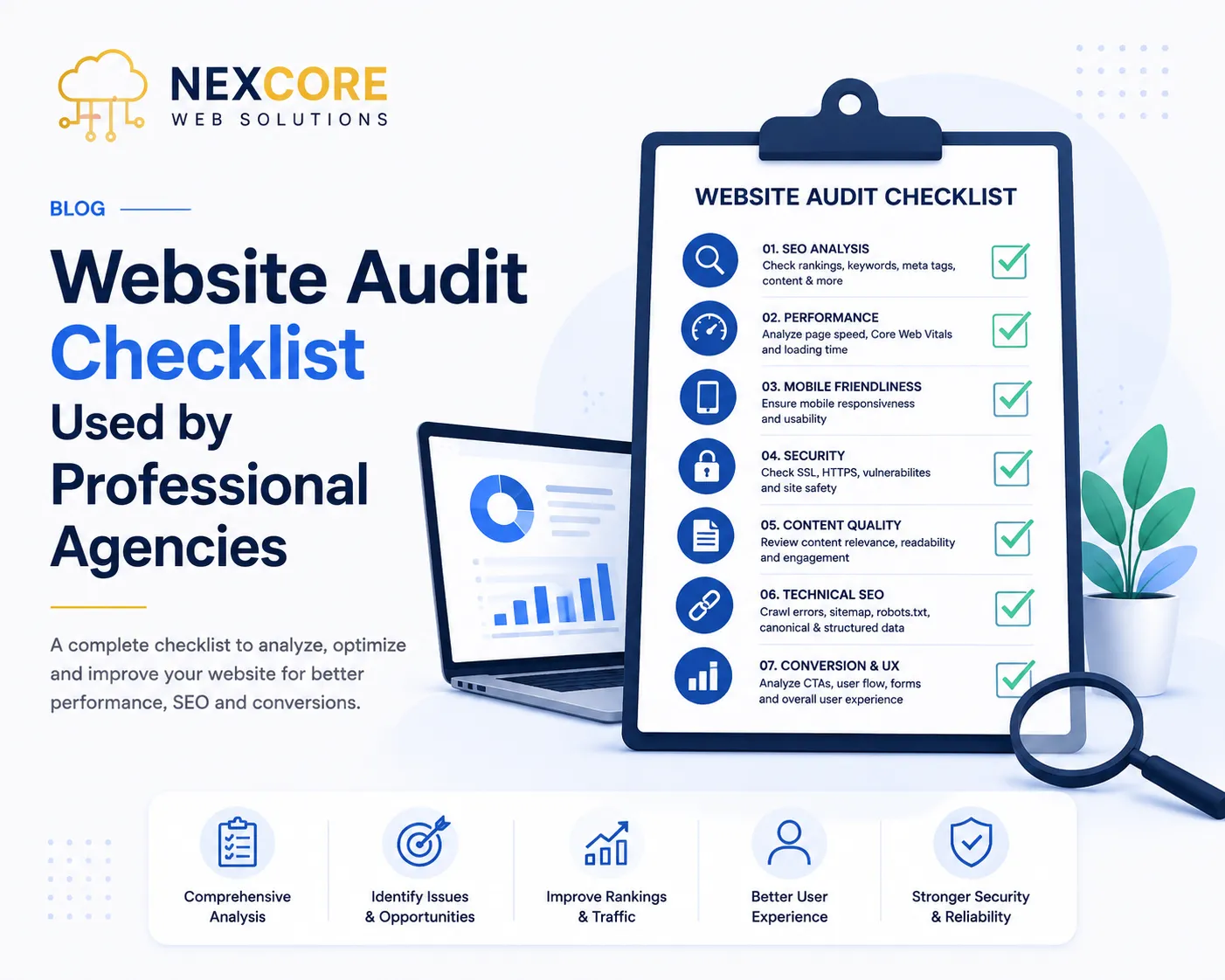
A website is one of the most important digital assets for any business, but simply having a website does not guarantee success. Professional agencies regularly perform website audits to identify technical problems, improve user experience, increase search visibility, and ensure websites achieve their business goals. Over time, websites can develop issues such as slow loading speeds, outdated content, broken links, security weaknesses, or poor conversion performance.
A detailed website audit provides a complete picture of how well a website is performing and where improvements are needed. Whether you run a small business website, an eCommerce store, or a corporate platform, following a professional audit checklist helps identify hidden problems that may affect traffic, rankings, and customer engagement. A proper audit turns website data into actionable improvements.
Technical Website Audit
Website Speed and Performance
Website speed is one of the first areas professional agencies evaluate during an audit. Slow-loading pages create poor user experiences and can increase bounce rates because visitors expect websites to load quickly. Agencies analyze factors such as server response time, image optimization, unnecessary scripts, caching settings, and overall page performance. Improving speed not only benefits users but also supports better search engine visibility.
Mobile Responsiveness
With most users accessing websites through smartphones, mobile performance is a critical audit factor. Agencies check whether layouts adjust properly across different screen sizes and whether buttons, menus, and forms remain easy to use. A website that works well on desktop but performs poorly on mobile can lose significant traffic and potential customers. Mobile-friendly design is now a basic requirement for modern websites.
Security Checks
Security is another essential part of a professional website audit. Experts review SSL certificates, outdated software, vulnerable plugins, malware risks, and incorrect security configurations. Websites that collect customer information require additional protection to maintain user trust. Regular security reviews help prevent data breaches and protect both businesses and visitors.
SEO Website Audit
On-Page SEO Analysis
Professional agencies examine important on-page SEO elements to understand how effectively a website communicates with search engines. This includes checking title tags, meta descriptions, heading structures, keyword usage, image alt text, and internal linking. Proper optimization helps search engines understand page topics and improves the chances of appearing for relevant searches. Every important page should have a clear purpose and optimized structure.
Content Quality Review
Content plays a major role in attracting visitors and building search authority. During an audit, agencies evaluate whether content is useful, accurate, original, and aligned with user search intent. They identify outdated information, duplicate content, thin pages, and missing opportunities for valuable resources. High-quality content should answer customer questions and demonstrate genuine expertise.
Technical SEO Factors
Technical SEO ensures search engines can properly crawl and understand a website. Agencies review XML sitemaps, robots.txt files, canonical tags, URL structures, schema markup, and indexing issues. Incorrect technical settings can prevent important pages from appearing in search results. Fixing these issues creates a stronger foundation for organic growth.
User Experience Audit
Website Navigation
A professional audit evaluates how easily visitors can move through a website. Complicated menus, unclear categories, and confusing layouts often cause users to leave before completing their goals. Agencies analyze navigation paths and recommend improvements that make important information easier to find. Simple and logical navigation improves both user satisfaction and conversions.
Design and Visual Experience
Website design affects how users perceive a business within seconds. Agencies review branding consistency, typography, spacing, color choices, and overall visual hierarchy. A professional design should guide visitors toward important information without creating distractions. Good design combines appearance with functionality to create a better browsing experience.
Conversion Optimization
A website should not only attract visitors but also encourage meaningful actions. Agencies review contact forms, call-to-action buttons, landing pages, and customer journeys to identify conversion barriers. Small improvements, such as clearer messaging or simpler forms, can significantly improve results. Conversion optimization ensures the website supports actual business objectives.
Content and Marketing Audit
Keyword and Competitor Research
Professional agencies analyze keyword performance and compare websites against competitors. This process identifies opportunities to target valuable search terms and improve market positioning. Understanding competitor strategies helps businesses discover content gaps and areas where they can provide better information. Keyword research should focus on customer needs rather than simply increasing traffic numbers.
Internal Linking Structure
Internal links help users discover related content while helping search engines understand website relationships. During an audit, agencies check whether important pages receive enough internal links and whether linking structures are logical. Poor internal linking can limit visibility for valuable pages. A strong structure improves navigation and supports better SEO performance.
Analytics and Tracking Review
Accurate data is necessary for making informed website improvements. Agencies verify that tools such as analytics platforms and conversion tracking systems are properly installed. They review traffic sources, user behavior, conversion rates, and engagement metrics. Without reliable tracking, businesses cannot clearly understand what is working or where improvements are required.
Website Maintenance Review
Plugin and Software Updates
Websites require regular maintenance to remain secure and functional. Agencies check whether CMS platforms, themes, plugins, and integrations are updated properly. Outdated components can create security vulnerabilities and compatibility problems. Regular updates help maintain website stability and performance.
Broken Links and Errors
Broken links, missing pages, and technical errors negatively affect both users and search engines. Professional audits include checking for 404 errors, incorrect redirects, and outdated references. Fixing these problems improves usability and ensures visitors can access important information without interruptions.
Conclusion
A professional website audit goes beyond checking basic design elements. It evaluates technical performance, SEO health, security, user experience, content quality, and conversion opportunities to identify areas for improvement. Businesses that regularly audit their websites can prevent issues, maintain strong search visibility, and provide better experiences for their customers. A website should continuously evolve as technology, customer expectations, and search engine requirements change. By following a detailed audit checklist similar to professional agencies, businesses can transform their websites into more effective tools for growth, engagement, and long-term success.
FAQs
1. How often should a business website be audited?
A business website should ideally be audited at least once or twice a year, depending on its size and complexity. Websites with frequent updates, online transactions, or high traffic may require more regular reviews. Regular audits help identify technical problems, security risks, SEO issues, and user experience problems before they negatively impact business performance.
2. What is the most important part of a website audit?
There is no single most important factor because website success depends on multiple areas working together. Technical performance, SEO, security, content quality, and user experience all influence results. A professional audit evaluates the entire website ecosystem to identify issues that may prevent visitors from finding, trusting, or interacting with the website.
3. Can a website audit improve Google rankings?
Yes, a website audit can identify SEO problems that may affect search visibility. Issues such as slow loading speeds, poor content structure, indexing errors, missing metadata, and weak internal linking can limit rankings. Fixing these problems creates better conditions for search engines to understand and rank website content more effectively.
4. How long does a professional website audit take?
The time required depends on website size, complexity, and the depth of analysis. A small business website may take a few days, while large corporate websites or eCommerce platforms may require several weeks. Professional audits involve detailed reviews rather than quick automated scans to provide accurate recommendations.
5. Do I need a professional agency for a website audit?
While basic checks can be performed using online tools, professional agencies provide deeper analysis and practical recommendations. They understand technical SEO, user behavior, security issues, and conversion strategies that automated tools may overlook. Businesses that depend heavily on their websites often benefit from expert audits to identify problems and growth opportunities.





I like that the checklist treats technical health and user experience as connected rather than separate tasks. One thing I’ve found useful is comparing audit results over time instead of relying on a one-time snapshot, because trends often reveal performance or SEO issues before they become major problems.