
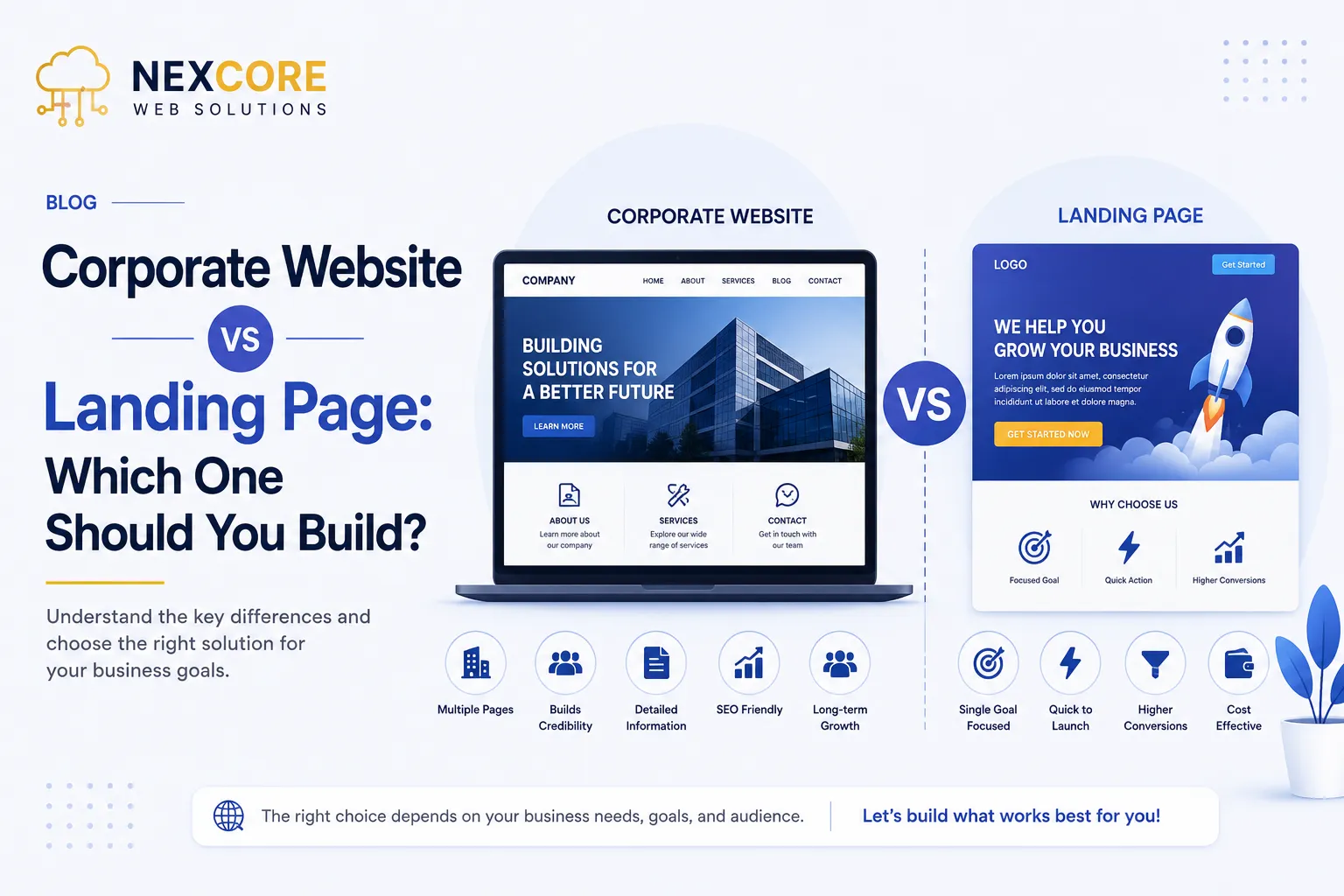
When establishing an online presence, one of the first decisions a business faces is whether to build a corporate website or a landing page. Although both serve important purposes, they are designed to achieve different business goals. A corporate website provides comprehensive information about a company, while a landing page focuses on encouraging visitors to take one specific action, such as submitting a contact form or purchasing a product.
Choosing the wrong option can reduce marketing effectiveness, confuse visitors, and limit business growth. Some companies invest heavily in a full website when a landing page would produce better campaign results, while others rely solely on a landing page and miss opportunities to build long-term credibility. Understanding the strengths, limitations, and ideal use cases of each option will help you make an informed decision that supports your business objectives.
Understanding the Basics
What Is a Corporate Website?
A corporate website is the primary online presence of a business. It typically contains multiple pages such as Home, About, Services, Products, Blog, Careers, and Contact. The goal is to provide visitors with detailed information about the company while establishing trust and supporting long-term customer relationships. A well-designed corporate website also improves brand authority and helps businesses attract organic traffic through search engines.
What Is a Landing Page?
A landing page is a single web page created with one specific objective. Unlike a traditional website, it removes unnecessary distractions and guides visitors toward completing one action, such as requesting a quote, registering for an event, downloading a guide, or making a purchase. Landing pages are commonly used for advertising campaigns, email marketing, and product launches because they maximize conversion rates.
Comparing Their Purpose
Brand Building vs Lead Generation
A corporate website focuses on building credibility and providing complete business information. Visitors can learn about the company’s background, explore services, read customer testimonials, and contact the business through multiple channels. This comprehensive approach helps establish trust over time. In contrast, a landing page prioritizes immediate action by keeping visitors focused on a single conversion goal.
Long-Term Presence vs Short-Term Campaigns
Corporate websites are designed as long-term digital assets that continue growing alongside the business. New pages, blog articles, service offerings, and customer resources can be added whenever needed. Landing pages are often campaign-specific and may only remain active while promoting a product, seasonal offer, or marketing initiative. Their focused design makes them highly effective for targeted promotions.
User Experience Differences
Navigation and Content
Corporate websites include structured navigation that allows visitors to explore multiple sections according to their interests. Customers can compare services, review company information, and access valuable resources before making decisions. Landing pages intentionally minimize navigation to eliminate distractions. By limiting choices, they encourage visitors to complete the intended action without leaving the page.
Content Depth
A corporate website provides extensive information because different visitors have different questions. Prospective customers may want pricing details, company history, blog content, or technical documentation before contacting the business. Landing pages present only the information necessary to support a single conversion objective. This focused approach improves clarity and reduces decision fatigue.
SEO and Marketing Considerations
Search Engine Optimization
Corporate websites generally perform better for long-term search engine optimization because they contain multiple pages targeting different keywords and topics. Blog articles, service pages, FAQs, and case studies help increase organic visibility over time. Landing pages can also rank in search results, but they usually target a limited number of keywords. Their primary strength lies in supporting paid advertising campaigns rather than broad organic growth.
Paid Advertising Performance
Landing pages are specifically optimized for advertising campaigns. Whether traffic comes from Google Ads, social media, or email marketing, visitors arrive with a clear intention. A focused page that matches the advertisement improves relevance and increases conversion rates. Sending paid traffic directly to a corporate homepage often produces weaker results because visitors must navigate additional pages before taking action.
Cost, Scalability, and Maintenance
Development Investment
A corporate website generally requires more time and resources because it includes multiple pages, navigation systems, content management, and additional functionality. Businesses should view this investment as building a long-term digital foundation. Landing pages are faster to develop because they focus on a single objective and require fewer design elements. This makes them ideal for businesses launching campaigns quickly.
Future Growth
As businesses expand, corporate websites can easily accommodate new products, services, blog categories, customer resources, and integrations. Their flexible structure supports long-term growth without requiring complete redesigns. Landing pages, however, remain limited to individual campaigns and are not intended to replace a comprehensive business website. Companies often create multiple landing pages alongside an existing corporate website.
Which Option Should You Choose?
Choose a Corporate Website If
A corporate website is the better choice when your business wants to establish credibility, improve search engine visibility, showcase multiple services, publish valuable content, and provide comprehensive information to potential customers. It works particularly well for service providers, professional firms, manufacturers, healthcare organizations, educational institutions, and businesses focused on long-term brand growth.
Choose a Landing Page If
A landing page is ideal when your goal is generating leads, promoting a single service, launching a product, collecting registrations, or supporting a paid advertising campaign. Businesses running seasonal promotions, webinars, limited-time offers, or lead generation campaigns benefit from the focused design because it encourages visitors to complete one specific action without distractions.
Can You Use Both?
For many businesses, the best solution is not choosing one over the other but combining both strategically. A corporate website serves as the central hub for your brand, while dedicated landing pages support specific marketing campaigns and advertising efforts. This approach allows businesses to build long-term credibility while maximizing conversions from targeted traffic. Together, they create a stronger and more effective digital marketing strategy.
Conclusion
The choice between a corporate website and a landing page depends entirely on your business objectives. If your priority is building trust, improving search visibility, and providing detailed information about your company, a corporate website offers the greatest long-term value. If your immediate goal is generating leads or maximizing conversions from a specific campaign, a landing page is often the better solution. Rather than viewing them as competing options, businesses should understand how each serves a unique purpose. By aligning your online strategy with your marketing goals, you can create an effective digital presence that attracts visitors, builds credibility, and converts prospects into loyal customers.
FAQs
1. What is the main difference between a corporate website and a landing page?
A corporate website contains multiple pages that provide comprehensive information about a business, its services, and its brand. A landing page is a single page designed with one specific conversion goal, such as collecting leads or promoting a product. The choice depends on whether your objective is long-term brand building or immediate campaign performance.
2. Which option is better for SEO?
A corporate website is generally better for long-term SEO because it includes multiple pages targeting different keywords, allowing businesses to build topical authority over time. Landing pages can also rank for specific search terms but are usually created to support marketing campaigns rather than broad organic visibility across multiple topics.
3. Can I use a landing page without having a corporate website?
Yes, you can use a landing page independently, especially for product launches, advertising campaigns, or lead generation. However, many customers may still look for additional company information before making a decision. Having a corporate website alongside your landing page often increases trust and supports long-term business credibility.
4. Which is more effective for generating leads?
Landing pages are typically more effective for lead generation because they focus visitors on a single action without unnecessary distractions. Clear messaging, persuasive content, and strong calls to action help increase conversion rates. Corporate websites generate leads as well, but they also serve many other purposes beyond immediate conversions.
5. Should small businesses build a website or a landing page first?
The answer depends on business goals and available resources. If the objective is establishing a professional online presence and attracting long-term customers, a corporate website is usually the better investment. If the focus is validating a business idea, running paid advertisements, or promoting a specific service, starting with a landing page can produce faster results.




