
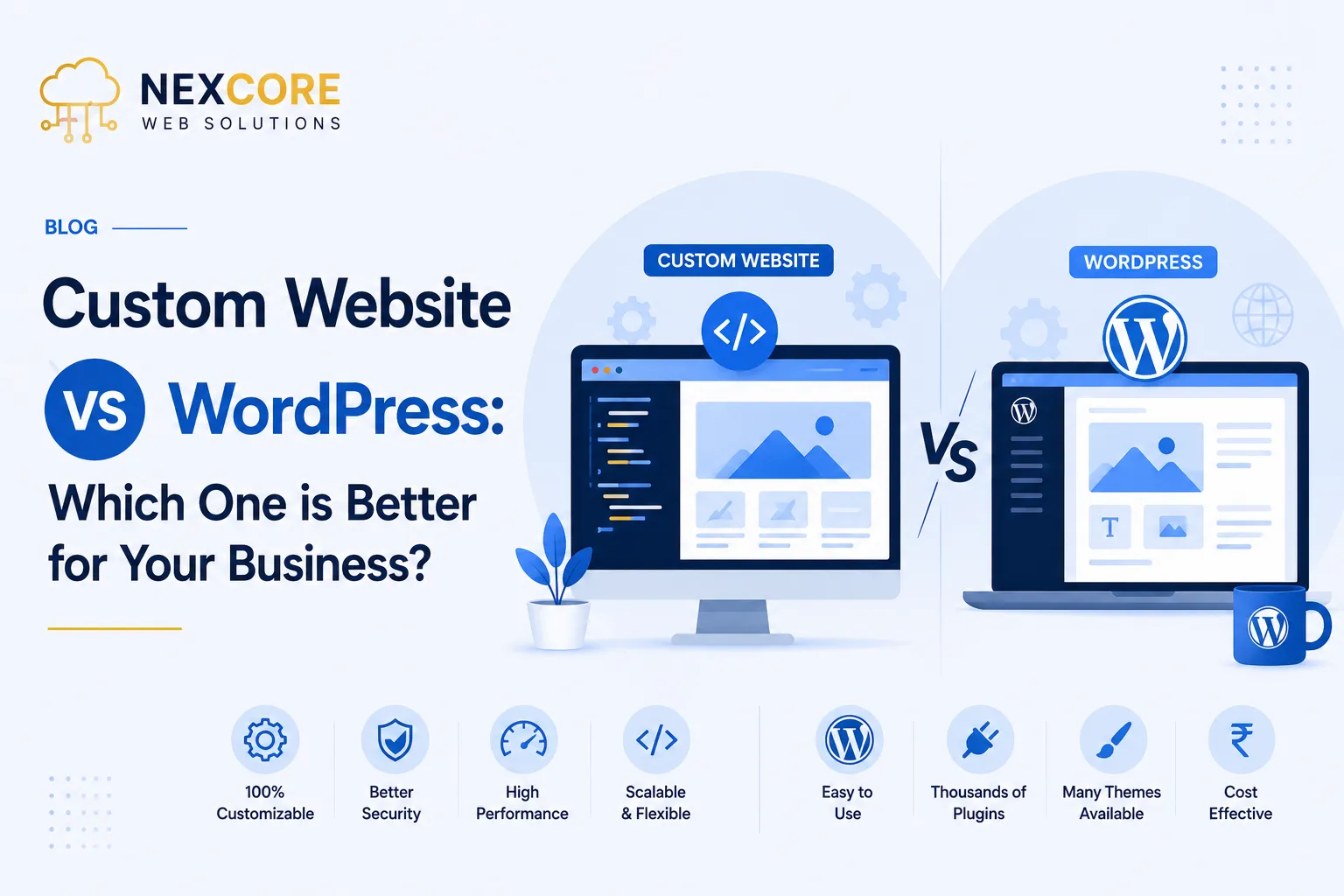
Choosing the right platform for your business website is one of the most important decisions you’ll make when building your online presence. Two of the most common options are a custom-built website and a WordPress website. While both can help your business attract customers and establish credibility, they differ significantly in terms of flexibility, cost, performance, scalability, and maintenance. The right choice depends on your business goals, budget, technical requirements, and future growth plans.
Many businesses assume that one option is universally better than the other, but that’s rarely true. A small local business has different needs than a rapidly growing startup or a large enterprise. Understanding the strengths and limitations of both approaches will help you invest in a website that supports your long-term success rather than creating unnecessary challenges later.
Understanding the Two Options
What Is a WordPress Website?
WordPress is a content management system (CMS) that powers millions of websites worldwide. It allows businesses to create and manage websites using themes, plugins, and an intuitive dashboard without requiring advanced programming knowledge. From company websites to blogs and online stores, WordPress can support a wide variety of business needs. Its large ecosystem makes it easy to add new features as your business grows.
What Is a Custom Website?
A custom website is designed and developed specifically for your business without relying on a standard CMS theme. Every feature, layout, and functionality is created according to your unique requirements. Developers build the website using programming languages and frameworks that best match the project’s objectives. This approach provides complete flexibility but typically requires more time, planning, and technical expertise.
Comparing Key Factors
Flexibility and Customization
A custom website offers unlimited flexibility because every feature is built specifically for your business. Whether you need unique customer portals, advanced booking systems, or complex workflows, developers can create solutions tailored to your operations. WordPress also provides extensive customization through plugins and themes, but certain advanced requirements may require custom development anyway. Businesses with highly specialized needs often benefit more from a fully custom solution.
Development Time and Cost
WordPress websites generally require less development time because many essential features are already available through existing themes and plugins. This makes them an excellent choice for businesses that want to launch quickly while keeping development costs manageable. Custom websites require planning, design, development, testing, and quality assurance from the ground up. Although they involve a larger initial investment, they may reduce future limitations for growing businesses.
Performance and Speed
Website performance depends on development quality rather than platform alone. A well-optimized WordPress website can load extremely quickly when built correctly and hosted on reliable infrastructure. However, excessive plugins or poorly coded themes may reduce performance over time. Custom websites allow developers to optimize every component specifically for speed, often resulting in highly efficient performance when developed following modern best practices.
Security and Maintenance
Security Considerations
Security should always be a priority regardless of the platform you choose. WordPress receives regular updates and benefits from a large security community, but outdated plugins or neglected maintenance can create vulnerabilities. A custom website minimizes risks associated with unnecessary third-party components because only required features are developed. Regardless of the platform, regular updates, backups, HTTPS encryption, and security monitoring remain essential.
Ongoing Maintenance
WordPress makes routine content updates simple through its user-friendly dashboard. Business owners can often publish blog posts, edit pages, or upload images without developer assistance. Custom websites may require developer support for certain content or functionality changes depending on how they are built. Before choosing either option, businesses should understand the long-term maintenance responsibilities involved.
SEO and Business Growth
Search Engine Optimization
Both WordPress and custom websites can achieve excellent search engine rankings when SEO best practices are implemented properly. Clean code, mobile responsiveness, fast loading speeds, structured headings, optimized metadata, and quality content matter far more than the platform itself. WordPress offers several SEO tools that simplify optimization for beginners. Custom websites provide greater control over technical SEO when built by experienced developers.
Scalability
As businesses expand, website requirements often become more complex. WordPress scales well for many organizations, especially when optimized correctly and supported by reliable hosting. However, businesses requiring advanced integrations or highly customized workflows may eventually outgrow standard WordPress capabilities. Custom websites provide greater scalability because new features can be developed without depending on plugin compatibility.
User Experience
Visitors rarely care which platform powers a website. What matters is whether the website is fast, easy to navigate, visually appealing, and simple to use. Both WordPress and custom development can deliver outstanding user experiences when designed thoughtfully. Businesses should prioritize usability over platform preferences because customer satisfaction directly influences conversions and long-term success.
Which Option Is Right for Your Business?
Choose WordPress If
WordPress is an excellent choice for small businesses, startups, blogs, local service providers, and organizations that want a professional website with manageable costs. It offers quick deployment, easy content management, and access to thousands of reliable plugins that extend functionality. Businesses that regularly publish content also benefit from WordPress’s intuitive editing experience. For many companies, it provides the perfect balance between flexibility and affordability.
Choose a Custom Website If
A custom website is better suited for businesses requiring unique functionality, advanced integrations, complex workflows, or specialized customer experiences. Companies expecting rapid growth may also benefit from custom development because it eliminates many limitations associated with standardized platforms. Although the initial investment is higher, the ability to build exactly what the business requires often delivers greater long-term value. Custom development also provides greater control over performance and future enhancements.
Conclusion
The decision between a custom website and WordPress should be based on your business objectives rather than industry trends or personal preferences. WordPress provides an affordable, flexible, and user-friendly solution for many businesses, while custom development offers unmatched flexibility, scalability, and control for organizations with specialized requirements. Neither option is inherently better because each serves different business needs. Carefully evaluating your budget, growth plans, technical requirements, and maintenance expectations will help you choose the platform that delivers the greatest long-term value. A well-planned website, regardless of the technology behind it, will support stronger customer engagement, improved search visibility, and sustainable business growth.
FAQs
1. Is a custom website better than WordPress for every business?
No. A custom website offers greater flexibility and scalability, but it also requires a higher investment and longer development time. WordPress is often the better choice for small businesses, startups, and companies that need a professional website quickly while maintaining lower costs. The best option depends on your business goals and technical requirements.
2. Which option is better for SEO: WordPress or a custom website?
Both platforms can perform exceptionally well in search engines when built correctly. Factors such as page speed, mobile responsiveness, clean code, structured content, and valuable information have a much greater impact on SEO than the platform itself. Proper optimization matters more than choosing WordPress or custom development.
3. Is WordPress secure enough for business websites?
Yes, WordPress is secure when it is regularly updated and maintained properly. Using trusted plugins, reliable hosting, HTTPS encryption, strong passwords, and routine security updates significantly reduces potential risks. Most security issues arise from outdated software or poor maintenance rather than WordPress itself.
4. Can I switch from WordPress to a custom website later?
Yes. Many businesses begin with WordPress and later migrate to a custom website as their requirements become more advanced. Proper planning during migration helps preserve search rankings, website content, and user experience. Working with experienced developers makes the transition much smoother and minimizes downtime.
5. Which option is more cost-effective in the long run?
The answer depends on your business needs. WordPress generally has lower upfront costs and is ideal for businesses with standard website requirements. A custom website requires a larger initial investment but may become more cost-effective over time if your business needs advanced functionality, unique integrations, or significant scalability without platform limitations.




