Many businesses celebrate growing website traffic, believing it automatically leads to more enquiries and sales. However, high visitor numbers alone do not guarantee business success. A website can attract thousands of monthly visitors while generating very few qualified leads because the traffic does not match the business’s target audience or the website fails to guide visitors toward meaningful action. Understanding why website gets traffic but no leads is essential for improving marketing performance and maximizing return on investment. Instead of focusing only on increasing visitor numbers, businesses should analyze traffic quality, user intent, website messaging, and conversion paths. By identifying the reasons behind unqualified traffic and optimizing the user journey, organizations can transform existing visitors into valuable enquiries without necessarily increasing overall website traffic.
Understanding the Traffic Problem
More Visitors Do Not Always Mean More Customers
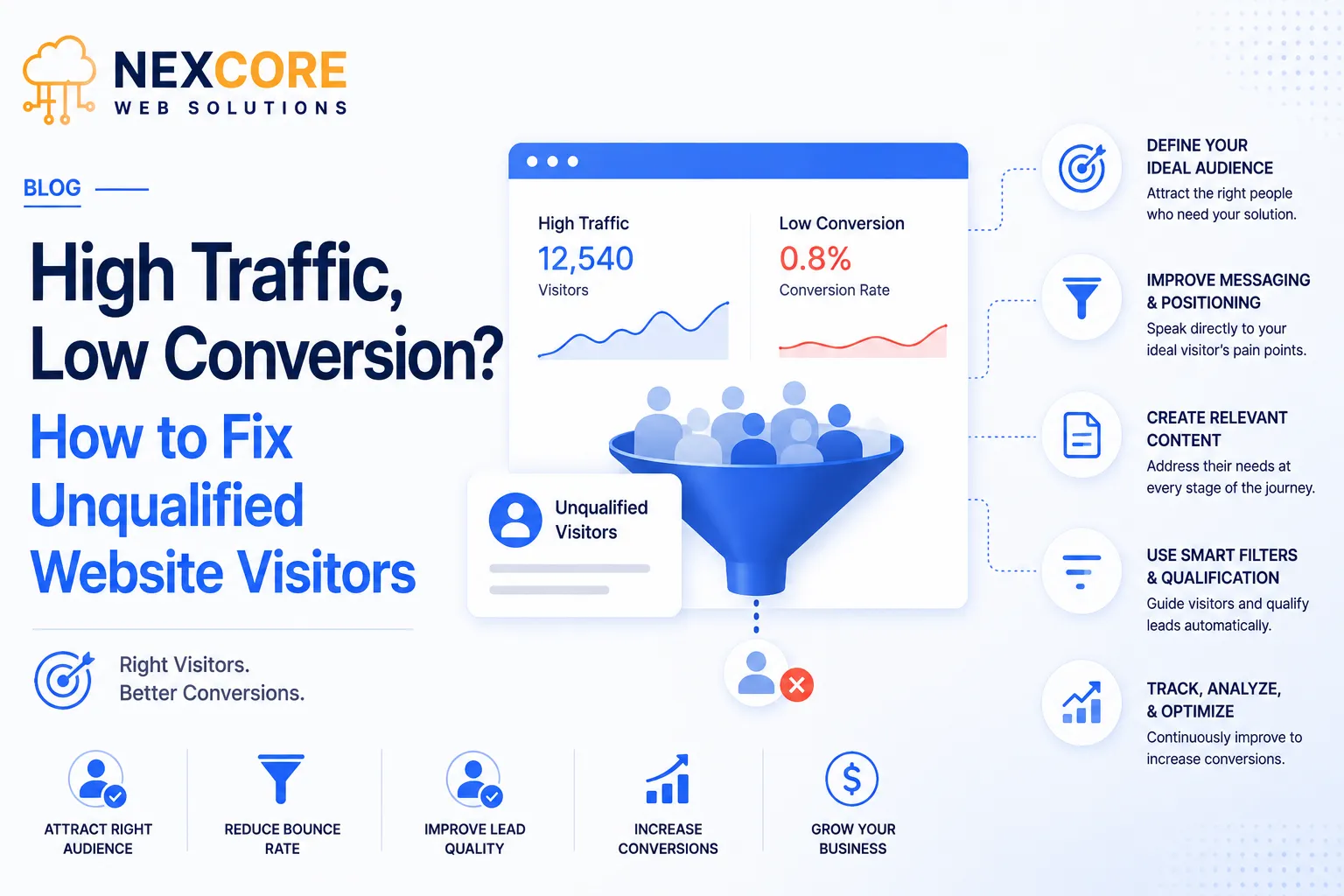
Website analytics often create a false sense of success when traffic numbers continue increasing while enquiries remain stagnant. Visitors may arrive through unrelated keywords, broad advertising campaigns, or low-intent searches that have little connection with the services offered. Although traffic appears healthy, these users rarely become qualified prospects. Measuring visitor quality is far more valuable than measuring visitor quantity alone.
Identify Conversion Weaknesses
Low conversion rates often indicate deeper issues beyond marketing campaigns. Businesses experiencing common website conversion failures should evaluate messaging, page relevance, calls to action, technical performance, and visitor intent together. Small improvements across these areas frequently produce better results than simply increasing advertising budgets or publishing more content.
Attract the Right Audience
Align Content with Search Intent
Website content should answer the questions and solve the problems that ideal customers actively search for online. If articles attract visitors interested in unrelated topics, conversion rates naturally decline. Creating content specifically for decision-makers and qualified buyers improves visitor relevance while increasing lead generation opportunities. Search intent should always guide content strategy.
Refine Marketing Campaigns
Paid advertising campaigns targeting broad audiences often generate impressive traffic numbers without producing valuable enquiries. Refining audience targeting, keyword selection, geographic focus, and demographic settings improves visitor quality. Marketing budgets perform more efficiently when campaigns prioritize relevance instead of maximum click volume. Better targeting attracts users with genuine purchasing interest.
Improve Website Messaging
Clarify Your Value Proposition
Visitors should immediately understand what your business offers and who your services are designed to help. Generic messaging forces users to guess whether your company matches their requirements. Clear value propositions communicate expertise, business outcomes, and customer benefits within the first few seconds. Strong positioning reduces unnecessary website exits.
Speak to Qualified Buyers
Website copy should address the specific concerns, challenges, and objectives of your ideal clients. Content written for everyone usually resonates with no one. Explaining how your services solve industry-specific problems attracts better-qualified prospects while discouraging visitors who are unlikely to convert. Relevant messaging improves both engagement and enquiry quality.
Strengthen the User Journey
Create Clear Navigation
Visitors should easily locate service pages, pricing information, contact options, and supporting resources without confusion. Complex navigation increases frustration and encourages users to leave before discovering valuable information. Logical website structures help qualified prospects move naturally toward enquiry forms or consultation requests. Better navigation supports stronger conversion performance.
Improve Calls to Action
Many websites fail because visitors never receive clear guidance about the next step. Calls to action should explain exactly what users gain by contacting the business, requesting a proposal, or scheduling a consultation. Clear expectations increase confidence while reducing hesitation. Effective guidance transforms passive browsing into meaningful engagement.
Build Trust and Authority
Demonstrate Expertise
Business buyers often compare multiple providers before making purchasing decisions. Customer testimonials, industry certifications, case studies, and measurable success stories help establish credibility quickly. Visitors become more comfortable initiating conversations when they see evidence of previous client success. Trust significantly influences conversion decisions.
Maintain Professional Presentation
Outdated designs, inconsistent branding, broken links, and poor technical performance create doubts about business credibility. Professional presentation reassures visitors that the organization delivers reliable services. Regular website maintenance protects both user experience and brand reputation. Technical quality supports stronger business confidence.
Analyze Visitor Behavior
Review Analytics Carefully
Traffic reports reveal far more than visitor counts. Businesses should analyze bounce rates, session duration, conversion paths, traffic sources, and user engagement across different pages. These insights identify where qualified visitors lose interest or encounter obstacles. Data-driven optimization produces more effective improvements than assumptions.
Test Continuously
Website optimization should remain an ongoing process. Testing headlines, page layouts, calls to action, landing pages, and contact forms provides measurable evidence about visitor preferences. Incremental improvements often generate significant long-term conversion gains. Continuous testing ensures the website evolves alongside customer expectations.
Focus on Qualified Conversions
Generating qualified leads requires balancing traffic growth with visitor relevance. Businesses should prioritize attracting people who genuinely require their services rather than maximizing overall visitor numbers. High-quality content, targeted marketing campaigns, strong messaging, and optimized conversion paths work together to improve enquiry quality. Successful lead generation depends on matching the right audience with the right solution at the right stage of the buying journey.
Conclusion
High website traffic without corresponding enquiries often signals a mismatch between visitor intent, marketing strategy, and website experience rather than a lack of demand. Businesses asking why website gets traffic but no leads should focus on improving visitor quality, strengthening messaging, optimizing navigation, building trust, and refining conversion paths before investing in additional traffic acquisition. Understanding customer intent and continuously analyzing user behavior allows organizations to create websites that attract qualified prospects instead of casual visitors. With consistent optimization, existing traffic becomes significantly more valuable, resulting in stronger lead generation, improved marketing efficiency, and sustainable business growth.
FAQs
1. Why does my website get traffic but no leads?
Your website may attract visitors who are not part of your target audience, or your messaging, calls to action, and user experience may not encourage conversions. Poor targeting, weak value propositions, technical issues, and unclear navigation often contribute to high traffic but low enquiry rates.
2. How can I attract more qualified website visitors?
Businesses can attract qualified visitors by targeting relevant keywords, creating content that matches buyer intent, refining paid advertising campaigns, optimizing SEO for specific services, and focusing on customer problems instead of broad informational topics. Better targeting improves both traffic quality and lead generation.
3. Does website content affect conversion rates?
Yes. Website content strongly influences conversion rates because it helps visitors understand your services, expertise, and business value. Clear messaging, customer-focused content, strong value propositions, and relevant information encourage qualified prospects to contact your business rather than leaving the website.
4. What metrics should I monitor besides website traffic?
Important metrics include bounce rate, conversion rate, average session duration, pages per session, enquiry form submissions, traffic sources, and user behavior across landing pages. These measurements provide better insight into visitor quality and overall website performance than traffic numbers alone.
5. How often should I optimize my website for conversions?
Website optimization should be an ongoing process rather than a one-time project. Regular reviews of analytics, user behavior, conversion data, messaging, landing pages, and technical performance help identify new opportunities for improvement while ensuring the website continues generating qualified business enquiries over time.