
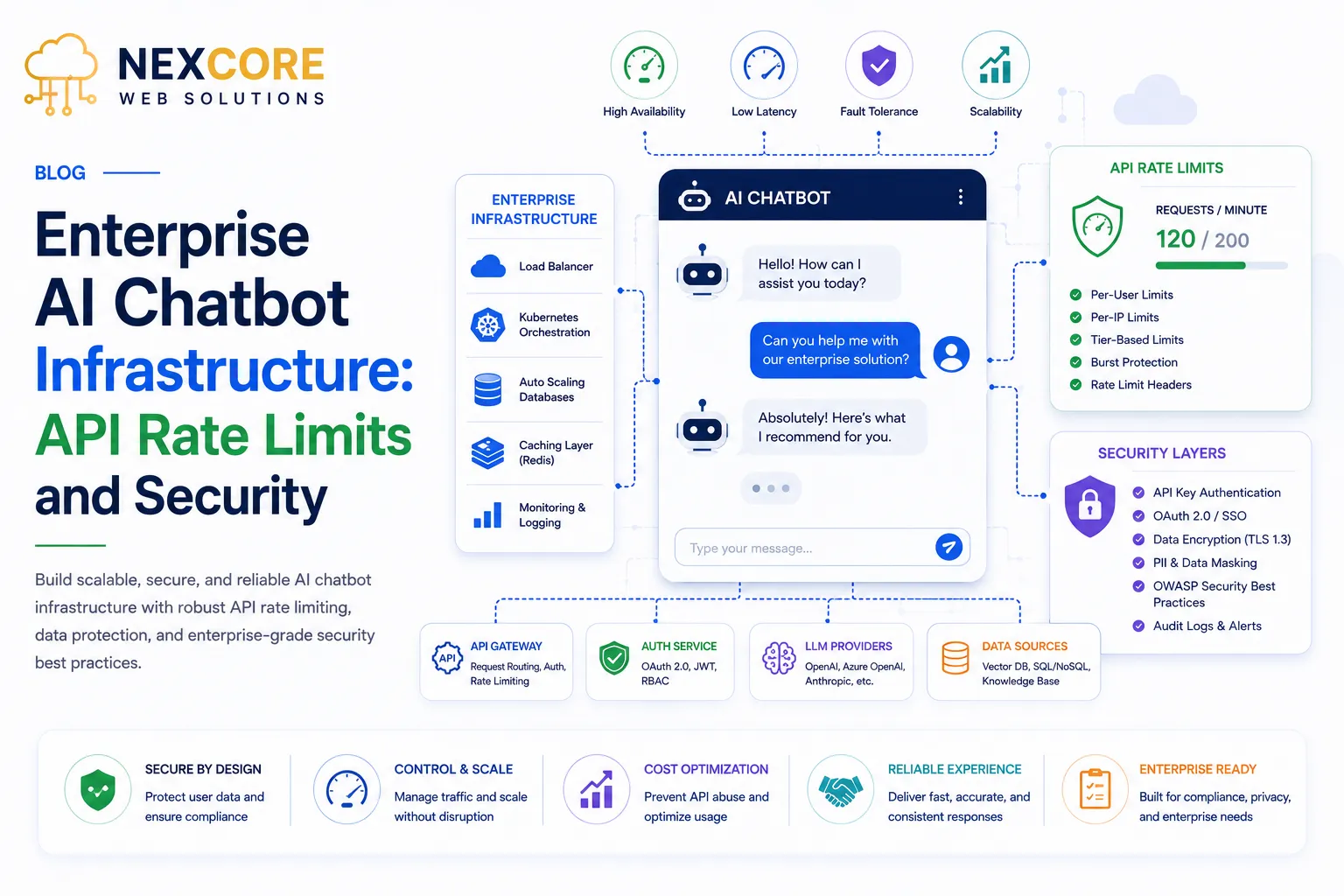
Enterprise AI chatbots have evolved from simple customer support tools into intelligent assistants capable of handling sales inquiries, technical support, internal knowledge management, and business automation. As organizations integrate these systems into mission-critical workflows, the underlying infrastructure becomes just as important as the chatbot’s conversational abilities. High availability, secure data handling, and reliable API communication determine whether an AI chatbot delivers consistent business value. Two of the most critical considerations are API rate limits and security. Ignoring either can result in service interruptions, degraded user experiences, unauthorized access, or compliance issues. Building a scalable AI chatbot infrastructure requires careful planning that balances performance, reliability, and protection of sensitive business information while ensuring the system remains responsive during both normal operations and periods of high demand.
Understanding Enterprise AI Chatbot Infrastructure
The Role of APIs
Modern AI chatbots rely heavily on APIs to communicate with language models, customer relationship management platforms, databases, authentication services, and third-party business applications. Every user interaction often triggers multiple API requests before a complete response is generated. These integrations enable chatbots to retrieve customer information, access business knowledge, process transactions, and automate workflows. A stable API infrastructure therefore becomes the foundation of enterprise chatbot performance.
Why Infrastructure Planning Matters
Unlike small consumer chatbots, enterprise deployments serve thousands of users simultaneously across different departments and geographic locations. Infrastructure must support high traffic volumes without sacrificing response speed or reliability. Poor architectural planning can lead to service outages, delayed responses, and increased operational costs. Designing for scalability from the beginning helps organizations avoid expensive infrastructure changes later.
Understanding API Rate Limits
What Are API Rate Limits?
API rate limits define the maximum number of requests that applications can send within a specified period. AI providers implement these limits to protect infrastructure, ensure fair resource allocation, and maintain service stability for all customers. When an application exceeds the allowed request volume, additional requests may be delayed or rejected temporarily. Understanding these limits is essential for maintaining uninterrupted chatbot performance.
Managing High Request Volumes
Enterprise chatbots frequently experience traffic spikes during product launches, customer support campaigns, or internal business operations. Without proper request management, these sudden increases can quickly exceed API limitations. Techniques such as request queuing, intelligent caching, load balancing, and asynchronous processing help distribute workloads efficiently. These strategies maintain consistent user experiences even during periods of exceptional demand.
Designing for Scalability
Load Balancing and Traffic Distribution
Load balancing distributes incoming chatbot requests across multiple servers or processing instances. This prevents individual systems from becoming overloaded while improving application availability. Intelligent traffic distribution also supports automatic failover if one server experiences issues. As organizations grow, scalable infrastructure allows additional computing resources to be added without disrupting existing services.
Caching Frequently Requested Data
Many chatbot conversations involve repetitive requests for common information such as product details, company policies, or frequently asked questions. Caching these responses reduces unnecessary API calls while improving response times. Effective caching strategies lower operational costs and reduce the likelihood of exceeding provider rate limits. Dynamic content should still be refreshed regularly to maintain accuracy.
Security Considerations
Protecting API Credentials
API keys provide access to valuable enterprise services and should always be treated as sensitive credentials. Hardcoding keys into applications or exposing them within client-side code creates significant security risks. Organizations should use secure secret management systems, encrypted storage, and environment variables to protect authentication credentials. Regular credential rotation further reduces the risk of unauthorized access.
Authentication and Authorization
Strong authentication verifies user identities before granting access to chatbot services. Authorization ensures users can access only the information and functionality appropriate for their roles. Enterprise environments commonly implement role-based access control alongside multi-factor authentication for sensitive systems. These security measures reduce the possibility of data exposure and unauthorized operations.
Data Privacy and Compliance
Protecting Sensitive Information
Enterprise AI chatbots often process customer records, financial information, employee data, or confidential business documents. Sensitive information should be encrypted during transmission and storage using modern security standards. Input validation and data filtering prevent accidental disclosure of confidential content during conversations. Organizations should also establish retention policies to minimize unnecessary data storage.
Meeting Regulatory Requirements
Many industries operate under regulations governing data privacy and security. Financial institutions, healthcare providers, and government organizations must demonstrate appropriate controls for handling sensitive information. Security logging, audit trails, and access monitoring help organizations satisfy compliance requirements while improving incident investigation capabilities. Compliance planning should become part of infrastructure design rather than an afterthought.
Monitoring and Incident Response
Continuous Performance Monitoring
Real-time monitoring allows development teams to identify API failures, increased response times, and unusual traffic patterns before users experience significant disruption. Dashboards tracking request volumes, error rates, and infrastructure health provide valuable operational insights. Automated alerts enable administrators to respond quickly when predefined thresholds are exceeded. Continuous monitoring improves both reliability and customer satisfaction.
Preparing for Security Incidents
No infrastructure can eliminate every possible security risk, making incident response planning essential. Organizations should define procedures for detecting, containing, investigating, and recovering from security events involving chatbot systems. Regular security assessments and penetration testing help identify vulnerabilities before attackers exploit them. Well-prepared response plans minimize downtime and reduce business impact during unexpected incidents.
Best Practices for Long-Term Success
Building enterprise AI chatbot infrastructure requires balancing performance optimization with robust security controls. Regular API usage reviews help organizations adjust rate limit strategies as demand changes over time. Security updates, dependency management, vulnerability scanning, and infrastructure testing should become routine operational activities rather than occasional projects. Continuous improvement enables chatbot platforms to remain reliable, secure, and scalable as business requirements evolve.
Conclusion
Enterprise AI chatbot infrastructure extends far beyond conversational intelligence. Reliable API management, scalable architecture, secure authentication, protected credentials, and strong data privacy practices all contribute to long-term operational success. Organizations that proactively address API rate limits through intelligent traffic management and caching can maintain consistent service quality even during periods of heavy demand. At the same time, comprehensive security controls protect valuable business information while supporting regulatory compliance and customer trust. As enterprise AI adoption continues to accelerate, businesses should view infrastructure planning as a strategic investment rather than a technical requirement. A secure, scalable, and well-monitored foundation ensures AI chatbots remain dependable business assets capable of supporting future innovation and organizational growth.
FAQs
1. What are API rate limits in enterprise AI chatbots?
API rate limits define how many requests an AI chatbot can send to an external service within a specific time period. Service providers use these limits to maintain system stability and prevent abuse. Understanding these restrictions helps organizations design scalable chatbot infrastructure that avoids interruptions during periods of high user activity.
2. Why is API security important for enterprise chatbots?
Enterprise chatbots frequently access customer records, internal databases, payment systems, and business applications through APIs. Strong API security protects sensitive information from unauthorized access, data breaches, and malicious attacks. Secure authentication, encrypted communication, and proper credential management help maintain both business continuity and customer trust.
3. How can businesses prevent exceeding API rate limits?
Organizations can reduce API usage through caching, request queuing, asynchronous processing, load balancing, and intelligent retry mechanisms. Monitoring traffic patterns also helps identify peak usage periods before limits are reached. Combining these techniques improves response times while maintaining reliable chatbot performance under increasing workloads.
4. What security practices should every enterprise AI chatbot follow?
Enterprise AI chatbots should implement encrypted communication, secure API key storage, role-based access control, multi-factor authentication where appropriate, continuous monitoring, audit logging, and regular vulnerability assessments. Keeping software dependencies updated and conducting routine security reviews further strengthens protection against evolving cybersecurity threats.
5. How does infrastructure monitoring improve chatbot reliability?
Infrastructure monitoring provides real-time visibility into API performance, response times, error rates, server health, and unusual traffic patterns. Automated alerts allow technical teams to identify and resolve issues before they affect users. Continuous monitoring also supports capacity planning, performance optimization, and proactive maintenance as chatbot usage grows.




