
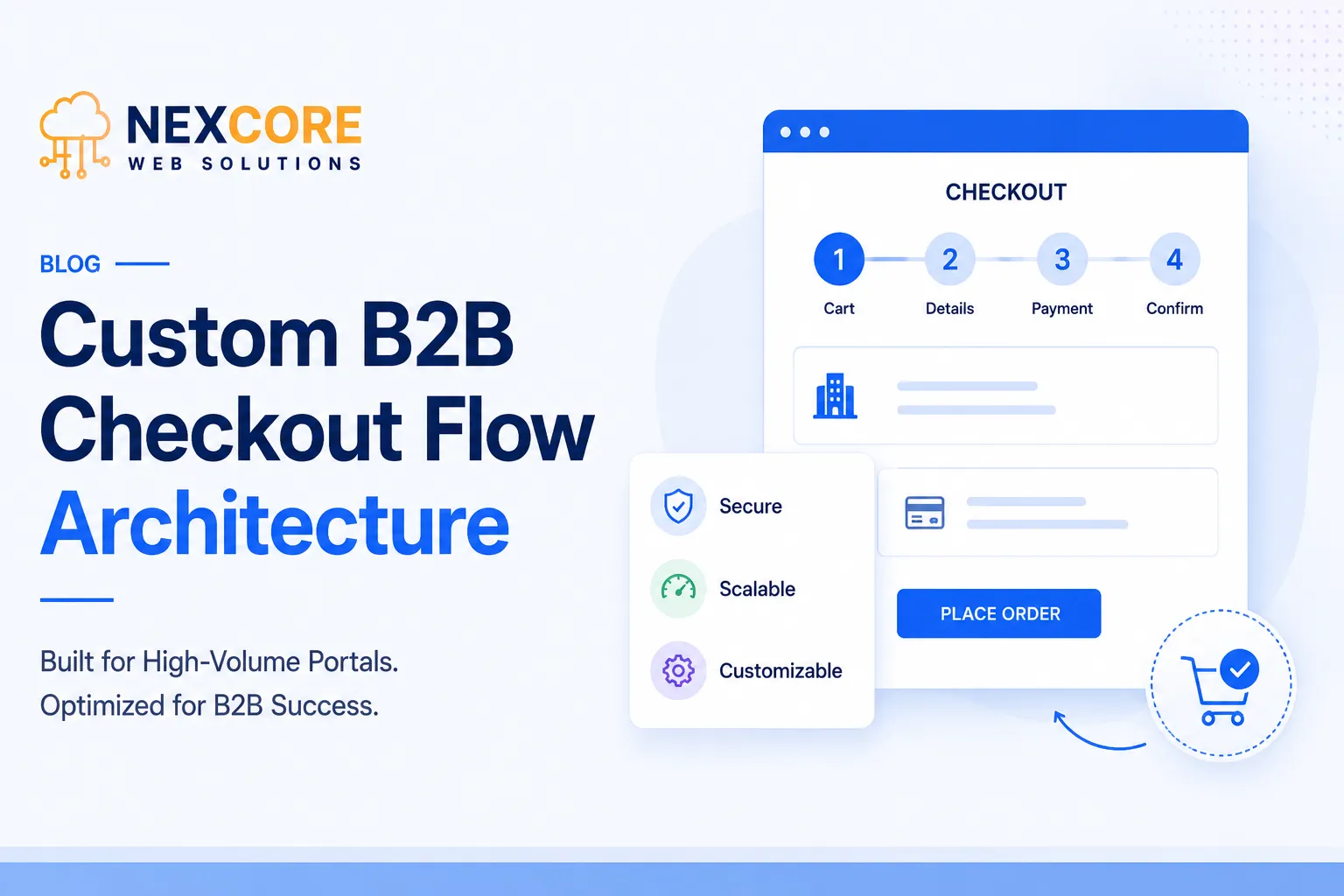
B2B purchasing processes are significantly more complex than standard consumer checkouts. Enterprise buyers often require custom pricing, negotiated contracts, bulk ordering, purchase approvals, multiple payment options, tax validation, and integration with procurement or ERP systems before completing a transaction. As transaction volumes grow, traditional checkout systems may struggle to support these advanced workflows while maintaining speed, security, and reliability. A custom B2B checkout flow architecture addresses these challenges by creating a flexible, scalable purchasing experience tailored to business requirements. Instead of treating checkout as a simple payment page, organizations design it as a complete transactional workflow that supports multiple stakeholders, automation, and enterprise integrations. Building the right architecture helps high-volume portals process transactions efficiently while improving customer satisfaction, operational performance, and long-term scalability.
Understanding B2B Checkout Complexity
Why B2B Checkouts Differ from B2C
Consumer purchases typically involve a single customer selecting products and completing payment within minutes. B2B transactions often include negotiated pricing, multiple decision-makers, approval workflows, purchase orders, account-based discounts, and recurring business relationships. These additional requirements demand a checkout architecture capable of handling far more than basic payment processing. Flexibility becomes essential for enterprise purchasing.
High-Volume Operational Challenges
Large B2B portals may process thousands of simultaneous orders from distributors, wholesalers, manufacturers, or enterprise customers. Heavy traffic increases pressure on inventory management, pricing engines, payment gateways, and backend databases. Without scalable architecture, performance bottlenecks can delay transactions and negatively affect customer experience. Reliable system design supports consistent operations under demanding workloads.
Designing a Scalable Checkout Architecture
Modular Checkout Components
A modular checkout architecture separates major functions into independent components such as cart management, pricing, tax calculation, inventory verification, shipping, payment processing, and order confirmation. Each component performs a specific responsibility while communicating through well-defined interfaces. This structure simplifies maintenance and allows future enhancements without affecting the entire checkout process.
API-Driven Integration
Modern B2B platforms frequently integrate with ERP systems, CRM platforms, inventory management software, shipping providers, and payment services. API-driven architecture enables seamless communication between these business systems while supporting automation throughout the checkout workflow. Well-designed integrations improve operational efficiency and reduce manual processing errors.
Supporting Enterprise Purchasing Workflows
Approval Processes
Many organizations require purchase approvals before orders are finalized. A custom checkout architecture should support configurable approval chains based on order value, department, customer role, or procurement policy. Automated approval workflows reduce administrative effort while maintaining compliance with internal purchasing procedures. Flexibility accommodates different organizational structures.
Account-Based Pricing
Enterprise customers often receive negotiated pricing based on contracts, purchase history, or customer categories. Checkout systems should dynamically calculate prices according to predefined business rules without requiring manual adjustments. Real-time pricing engines ensure consistency while simplifying complex commercial agreements. Personalized pricing strengthens customer relationships.
Performance Optimization
Fast Transaction Processing
High-volume portals cannot afford delays during checkout because slow transactions increase abandonment and reduce customer confidence. Efficient database queries, optimized APIs, asynchronous processing, and intelligent caching help maintain responsive performance under heavy workloads. Performance optimization ensures smooth purchasing experiences even during traffic spikes.
Reliable Order Processing
Every completed transaction should move reliably through payment validation, inventory allocation, invoicing, fulfillment, and notification workflows. Event-driven architectures and message queues improve reliability by preventing failures from interrupting the entire checkout process. Resilient systems continue processing transactions even when individual services experience temporary disruptions.
Security and Compliance
Protect Sensitive Business Data
Checkout systems process confidential customer information, payment details, pricing agreements, and purchasing records. Strong encryption, secure authentication, role-based access control, and encrypted communication help protect sensitive enterprise data. Security should remain integrated throughout every stage of the transaction lifecycle.
Regulatory Compliance
Many industries require compliance with financial regulations, tax requirements, privacy laws, and payment security standards. Checkout architecture should support audit trails, transaction logging, secure record management, and configurable compliance workflows. Proper governance reduces legal and operational risks while simplifying future audits.
Monitoring and Continuous Improvement
Track Checkout Performance
Analytics provide valuable insights into checkout completion rates, processing times, payment failures, approval delays, and customer behavior. Monitoring dashboards help engineering teams identify performance bottlenecks before they affect business operations. Continuous measurement supports informed optimization decisions based on real operational data.
Test and Refine
Business requirements evolve as organizations introduce new products, payment methods, customer types, and procurement processes. Regular testing ensures checkout workflows remain efficient while adapting to changing operational needs. Continuous refinement improves customer experience without disrupting existing business processes. Ongoing optimization supports sustainable long-term growth.
Building for Future Growth
Scalable checkout architecture should anticipate future expansion rather than focusing only on current business requirements. Modular design, cloud-native infrastructure, automation, and API-first development simplify future integrations while supporting international expansion, new payment technologies, and evolving customer expectations. Organizations that build flexible checkout systems today reduce technical debt while preparing for tomorrow’s business opportunities.
Conclusion
A custom B2B checkout flow is much more than a payment interface—it is a critical business workflow connecting customers, procurement systems, inventory management, financial operations, and enterprise applications. High-volume portals require scalable architectures capable of supporting complex purchasing processes without sacrificing speed, reliability, or security. Modular design, API-driven integration, automated approvals, personalized pricing, resilient transaction processing, and continuous monitoring all contribute to successful enterprise checkout systems. By aligning technical architecture with real business processes, organizations create purchasing experiences that improve operational efficiency, strengthen customer relationships, and support sustainable growth as transaction volumes continue increasing across modern digital commerce platforms.
FAQs
1. What is a custom B2B checkout flow?
A custom B2B checkout flow is an enterprise purchasing process designed specifically for business transactions. It supports advanced features such as negotiated pricing, purchase approvals, bulk ordering, ERP integration, multiple payment methods, tax handling, and account-specific workflows that standard consumer checkout systems typically do not provide.
2. Why do B2B businesses need custom checkout architecture?
B2B businesses require custom checkout architecture because enterprise purchasing involves complex approval processes, contract pricing, procurement rules, large order volumes, and integration with multiple business systems. Tailored architecture improves operational efficiency, customer experience, transaction reliability, and long-term scalability.
3. How does API integration improve checkout performance?
API integration connects checkout systems with ERP platforms, payment gateways, inventory management, CRM software, shipping providers, and tax services. Automated communication reduces manual processing, improves data accuracy, accelerates transaction processing, and creates a more efficient purchasing workflow for enterprise customers.
4. How can high-volume portals handle heavy checkout traffic?
High-volume portals handle heavy checkout traffic using scalable cloud infrastructure, load balancing, caching, optimized databases, asynchronous processing, event-driven architecture, and distributed services. These technologies ensure consistent performance while processing thousands of concurrent transactions without affecting user experience.
5. What security measures should a B2B checkout system include?
A secure B2B checkout system should include encrypted communication, role-based access control, multi-factor authentication, secure payment processing, transaction logging, audit trails, fraud detection, compliance monitoring, and strong data protection practices. These measures help safeguard sensitive business information while supporting regulatory requirements.




