
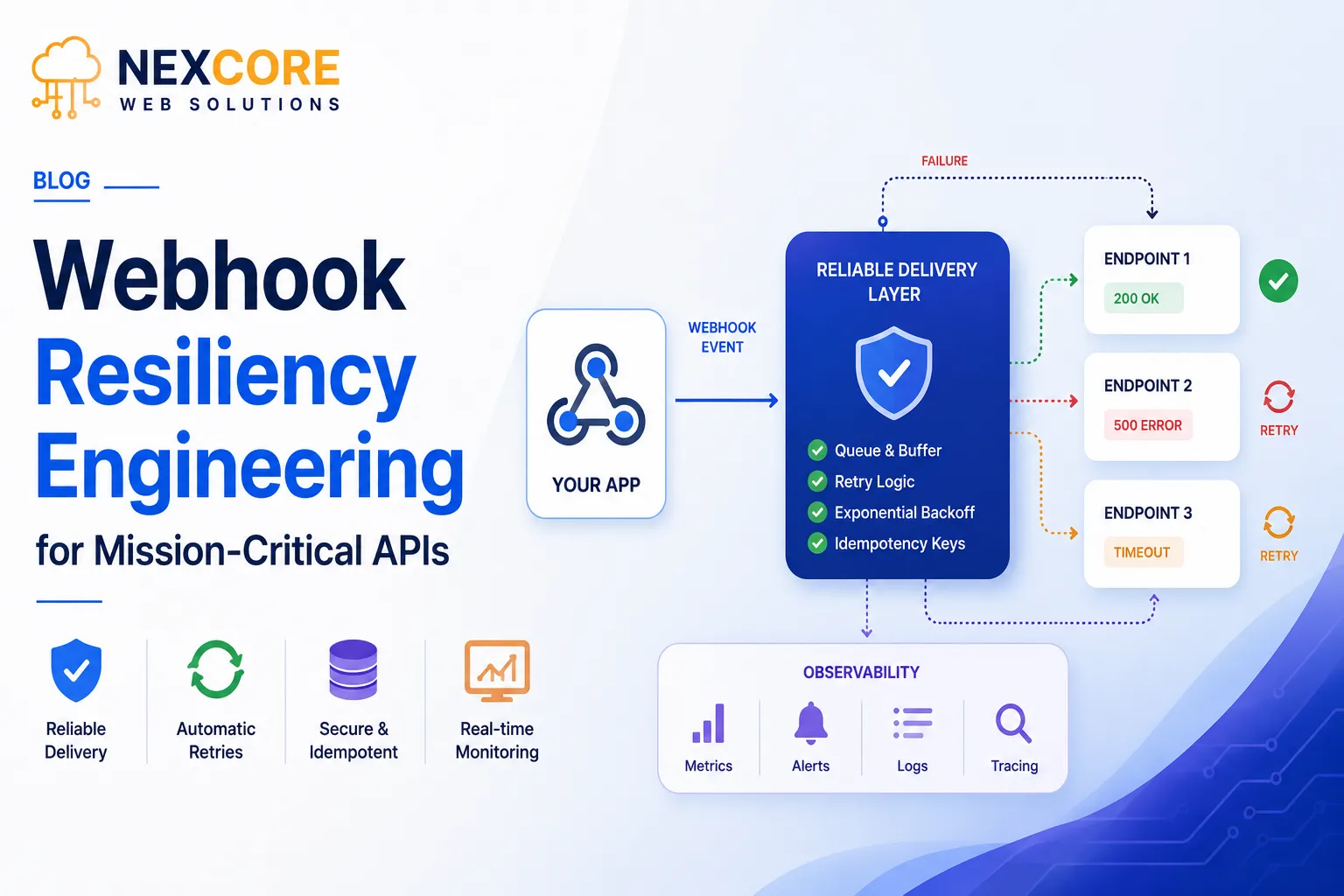
Modern software ecosystems depend heavily on APIs to exchange data between applications in real time. Webhooks have become one of the most efficient methods for delivering event-driven communication because they automatically notify connected systems whenever important events occur. Payment confirmations, order updates, customer registrations, inventory changes, and authentication events often rely on webhooks to maintain synchronized business processes. However, webhook delivery is not guaranteed. Network interruptions, temporary service outages, duplicate events, and endpoint failures can disrupt mission-critical workflows if resiliency is not built into the architecture. Webhook resiliency engineering focuses on designing reliable, fault-tolerant delivery systems that continue functioning under unexpected conditions. Understanding these engineering principles helps organizations build dependable integrations that protect business operations while maintaining consistent API reliability and customer trust.
Understanding Webhook Architecture
What Are Webhooks?
Webhooks are event-driven HTTP callbacks that automatically send data from one application to another when predefined events occur. Instead of repeatedly polling an API for updates, receiving systems are notified immediately whenever relevant activity takes place. This communication model reduces unnecessary network traffic while improving responsiveness. Businesses commonly use webhooks for payment processing, notifications, customer management, logistics, and automation workflows.
Why Reliability Matters
Mission-critical APIs often support financial transactions, healthcare systems, enterprise software, and other business operations where missed events can create serious consequences. A failed webhook delivery may prevent order fulfillment, delay payment confirmation, or interrupt customer services. Reliable webhook infrastructure ensures events are delivered consistently despite temporary technical failures. High availability becomes essential for maintaining business continuity.
Common Webhook Failure Scenarios
Network Interruptions
Temporary network failures represent one of the most common causes of webhook delivery problems. Internet congestion, routing issues, or infrastructure outages may prevent successful communication between systems. Without proper retry mechanisms, important events could be permanently lost. Resilient webhook systems automatically recover from temporary network disruptions while preserving event integrity.
Endpoint Availability
Receiving applications may occasionally become unavailable because of maintenance, deployment activities, server overload, or unexpected failures. Sending systems should expect these situations rather than assuming every webhook request succeeds immediately. Intelligent retry strategies help maintain reliable communication without overwhelming recovering services. Graceful handling of endpoint failures improves overall system stability.
Building Reliable Delivery Systems
Retry Mechanisms
Automatic retries represent one of the most important resiliency techniques for webhook delivery. Instead of abandoning failed requests after a single attempt, systems retry delivery according to predefined schedules. Exponential backoff gradually increases retry intervals, reducing unnecessary traffic during prolonged outages. Well-designed retry policies improve delivery success rates while protecting infrastructure resources.
Idempotency
Duplicate webhook deliveries may occur because retry mechanisms cannot always determine whether previous requests completed successfully. Idempotent processing ensures receiving systems safely handle repeated events without creating duplicate records or executing business actions multiple times. Unique event identifiers allow applications to recognize previously processed requests. Idempotency protects data consistency throughout distributed systems.
Queue-Based Processing
Decoupling Event Delivery
Processing webhook requests synchronously may introduce delays or failures if downstream systems become overloaded. Message queues decouple event generation from delivery, allowing events to wait safely until receiving services become available. Queue-based architectures improve scalability while reducing the likelihood of event loss during temporary infrastructure disruptions. This approach also simplifies traffic management during peak demand.
Managing Traffic Spikes
Mission-critical applications frequently experience sudden increases in webhook volume during promotional campaigns, seasonal demand, or system-wide events. Queue-based processing absorbs these spikes without overwhelming receiving endpoints. Events continue processing gradually according to available system capacity. Controlled delivery maintains service reliability while preventing cascading infrastructure failures.
Security Best Practices
Authenticating Webhooks
Webhook endpoints should never trust incoming requests automatically. Digital signatures, authentication tokens, and request validation confirm that webhook events originate from authorized systems rather than malicious actors. Secure authentication reduces the risk of spoofed requests and unauthorized data manipulation. Strong verification protects sensitive business operations from external threats.
Encrypting Data Transmission
Webhook payloads frequently contain confidential business information including customer records, payment details, or operational data. Transport Layer Security encrypts communications between sending and receiving systems, protecting information during transmission. Combined with secure authentication, encrypted communication strengthens overall API security while supporting regulatory compliance requirements.
Monitoring and Observability
Delivery Monitoring
Continuous monitoring provides visibility into webhook success rates, delivery latency, retry activity, and endpoint availability. Real-time dashboards allow engineering teams to identify problems before they affect critical business processes. Historical delivery metrics also help optimize retry strategies and infrastructure capacity planning. Comprehensive monitoring strengthens operational reliability.
Logging and Auditing
Detailed logging enables organizations to trace every webhook event throughout its lifecycle. Engineers can investigate failed deliveries, duplicate events, retry attempts, and processing outcomes using centralized logs. Audit trails also support regulatory compliance and security investigations when required. Accurate event records improve both operational transparency and incident response capabilities.
Planning for Failure
Reliable webhook systems assume failures will occur and prepare accordingly. Disaster recovery procedures, redundant infrastructure, automated failover, and regular resilience testing help organizations maintain webhook availability during unexpected disruptions. Simulating network failures, endpoint outages, and traffic spikes allows engineering teams to validate recovery procedures before production incidents occur. Proactive resilience planning minimizes operational risk while improving long-term system stability.
Conclusion
Webhook resiliency engineering plays a vital role in ensuring mission-critical APIs remain reliable under real-world operating conditions. Automatic retries, idempotent processing, queue-based architectures, strong authentication, encrypted communication, and continuous monitoring work together to create dependable event delivery systems. Rather than assuming every request will succeed immediately, resilient architectures anticipate failures and recover automatically without disrupting business operations. Organizations that invest in webhook resiliency protect customer experiences, reduce operational downtime, and strengthen confidence in distributed application ecosystems. As digital integrations become increasingly important across industries, reliable webhook engineering provides the technical foundation necessary for secure, scalable, and fault-tolerant API communication.
FAQs
1. What is webhook resiliency?
Webhook resiliency refers to designing webhook systems that continue delivering events reliably even when network failures, endpoint outages, or temporary infrastructure problems occur. It includes techniques such as automatic retries, queue-based processing, idempotency, monitoring, and failover mechanisms that help prevent event loss and maintain consistent communication between applications.
2. Why are retry mechanisms important for webhooks?
Retry mechanisms ensure failed webhook deliveries are attempted again instead of being discarded after a single failure. Temporary network interruptions, overloaded servers, or maintenance windows often prevent immediate delivery. Intelligent retry strategies significantly improve event delivery success while reducing the risk of lost business transactions or incomplete workflows.
3. What is idempotency in webhook processing?
Idempotency allows receiving systems to process duplicate webhook events safely without creating duplicate records or repeating business actions. Each webhook contains a unique identifier that enables applications to recognize previously processed events. This approach maintains data consistency while supporting reliable retry mechanisms during communication failures.
4. How do message queues improve webhook reliability?
Message queues separate event generation from delivery, allowing webhook events to be stored safely until receiving systems are ready to process them. Queue-based architectures absorb traffic spikes, reduce endpoint overload, improve scalability, and minimize event loss during temporary infrastructure outages or periods of exceptionally high demand.
5. How can organizations secure webhook endpoints?
Organizations should secure webhook endpoints using digital signatures, authentication tokens, encrypted HTTPS communication, request validation, access controls, and continuous monitoring. These security measures verify that webhook requests originate from trusted systems while protecting sensitive business information from unauthorized access, spoofing attempts, and other cybersecurity threats.




