
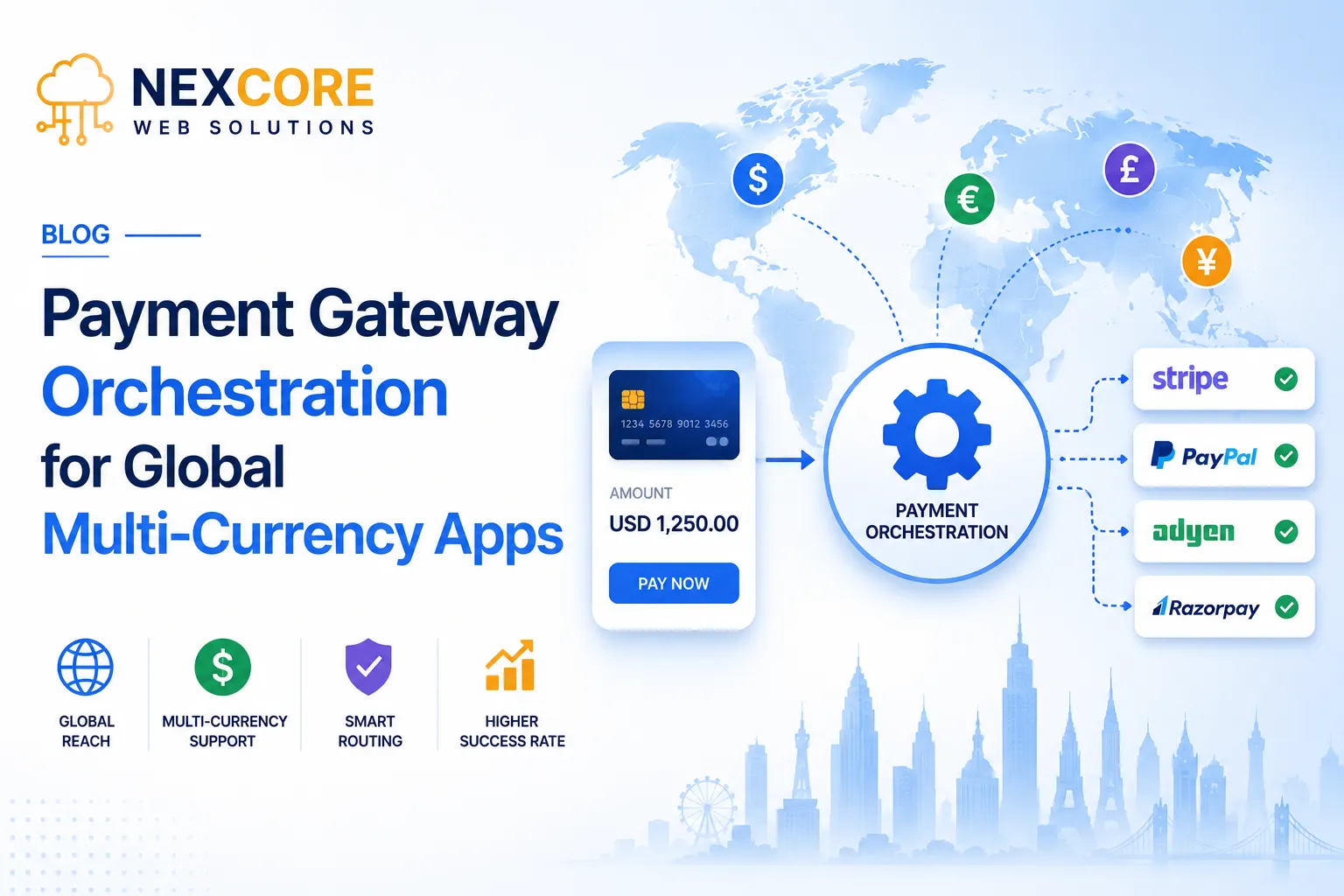
As businesses expand into international markets, accepting payments from customers across different countries becomes increasingly complex. A single payment gateway is often insufficient because payment preferences, regulations, currencies, and banking systems vary significantly from one region to another. This is where payment gateway orchestration becomes essential. Instead of relying on one provider, orchestration platforms intelligently manage multiple payment gateways through a unified infrastructure. They automatically route transactions based on factors such as geography, payment method, transaction cost, currency, and gateway performance. For global multi-currency applications, this approach improves payment success rates, reduces operational risks, and creates a smoother checkout experience. Understanding how payment gateway orchestration works enables businesses to build scalable payment systems that support international growth while delivering reliable and secure payment experiences for customers worldwide.
Understanding Payment Gateway Orchestration
What Is Payment Gateway Orchestration?
Payment gateway orchestration is a technology layer that connects multiple payment providers through a centralized management platform. Instead of integrating every payment gateway individually, applications communicate with the orchestration layer, which determines the most appropriate gateway for each transaction. This architecture simplifies payment management while providing greater flexibility for expanding into new markets. It also reduces dependency on any single payment provider.
Why Multi-Currency Apps Need It
Global applications serve customers using different currencies, local payment methods, and financial institutions. A payment provider that performs well in one country may experience lower approval rates in another. Payment orchestration intelligently routes transactions to gateways that are best suited for specific regions and currencies. This improves customer satisfaction by reducing payment failures and providing familiar payment options.
Benefits of Payment Gateway Orchestration
Higher Payment Success Rates
Failed payments often occur because of temporary gateway outages, bank restrictions, or regional processing limitations. Orchestration platforms automatically reroute declined transactions through alternative gateways when appropriate. Intelligent routing significantly increases successful payment completion without requiring customers to restart the checkout process. Higher authorization rates directly contribute to increased revenue and reduced cart abandonment.
Reduced Operational Complexity
Managing multiple payment gateway integrations individually requires ongoing maintenance, security updates, and API management. A centralized orchestration platform simplifies these responsibilities by providing a unified integration layer. Development teams can introduce new payment providers or remove existing ones without making extensive changes to the application’s payment logic. This flexibility supports continuous business expansion.
Intelligent Transaction Routing
Geographic Optimization
Customer location plays an important role in payment processing efficiency. Routing European transactions through providers optimized for European banking networks often produces better authorization rates than using gateways located elsewhere. Similar regional optimization benefits customers in Asia, North America, Latin America, and other global markets. Intelligent geographic routing creates faster and more reliable payment experiences.
Cost-Based Routing
Different payment gateways charge different transaction fees depending on payment methods, currencies, and geographic regions. Payment orchestration allows businesses to route transactions through providers offering the most favorable processing costs while maintaining reliable performance. Cost optimization becomes particularly valuable for organizations processing large transaction volumes across multiple international markets.
Supporting Multiple Currencies
Dynamic Currency Handling
Global customers prefer paying in their local currencies because it provides pricing transparency and reduces uncertainty. Payment orchestration platforms manage currency selection, exchange rate handling, and gateway compatibility without requiring separate payment systems for each market. Customers receive familiar pricing while businesses maintain centralized payment operations. This improves both user experience and operational efficiency.
Local Payment Methods
Credit cards are not the preferred payment method everywhere. Some regions rely heavily on digital wallets, bank transfers, instant payment systems, or local financial networks. Payment orchestration allows businesses to offer payment methods that match customer preferences in each country. Supporting regional payment options increases conversion rates while improving customer trust.
Security and Compliance
Protecting Financial Data
Payment systems process highly sensitive financial information that requires comprehensive security controls. Payment orchestration platforms typically implement encryption, tokenization, secure authentication, and fraud prevention mechanisms throughout the transaction lifecycle. These protections reduce exposure to payment fraud while safeguarding customer information during transmission and storage. Strong security practices also strengthen customer confidence.
Meeting Regulatory Requirements
Global payment processing requires compliance with numerous regional regulations and industry standards. Requirements may vary depending on customer location, payment method, and financial institution. Payment orchestration platforms simplify compliance by supporting standardized security practices and integrating with certified payment providers. Businesses can expand internationally while reducing regulatory complexity.
Monitoring and Performance
Real-Time Analytics
Payment orchestration platforms provide centralized visibility into transaction success rates, gateway performance, declined payments, and regional processing trends. These insights help organizations identify underperforming gateways and optimize routing strategies continuously. Data-driven decisions improve payment reliability while supporting long-term business growth. Performance monitoring also simplifies troubleshooting when issues arise.
High Availability
Payment downtime directly affects revenue and customer trust. Orchestration platforms improve availability by automatically redirecting transactions when one gateway experiences technical issues. This redundancy minimizes disruptions during outages while maintaining uninterrupted payment processing. High availability becomes particularly important for businesses operating around the clock across multiple time zones.
Choosing the Right Orchestration Strategy
Selecting a payment orchestration solution requires evaluating business size, target markets, supported currencies, payment methods, regulatory requirements, and expected transaction volumes. Organizations should prioritize platforms that provide flexible integrations, strong security, reliable monitoring, and scalable architecture. Future expansion plans should also influence technology decisions because payment requirements continue evolving as businesses enter new international markets. Careful planning ensures long-term adaptability while minimizing future integration challenges.
Conclusion
Payment gateway orchestration has become an essential component of modern global applications that serve customers across multiple countries and currencies. By intelligently managing multiple payment providers through a unified platform, businesses improve authorization rates, reduce transaction costs, enhance reliability, and simplify international payment operations. Successful orchestration extends beyond technical integration by supporting security, regulatory compliance, local payment preferences, and continuous performance optimization. As digital commerce expands worldwide, organizations must build payment infrastructures capable of adapting to changing customer expectations and regional financial ecosystems. Businesses that invest in scalable payment orchestration strategies create smoother checkout experiences, strengthen customer trust, and establish a flexible foundation for sustainable international growth.
FAQs
1. What is payment gateway orchestration?
Payment gateway orchestration is a centralized platform that manages multiple payment gateways through a single integration. It automatically routes transactions based on factors such as geography, currency, payment method, gateway availability, and transaction costs. This approach improves payment reliability, simplifies payment management, and supports international business expansion.
2. Why do global applications need multiple payment gateways?
Different countries use different banking systems, payment methods, currencies, and financial regulations. Relying on a single payment gateway may result in lower authorization rates or limited payment options in certain regions. Multiple gateways provide greater flexibility, improve transaction success rates, and ensure customers can pay using their preferred methods.
3. How does payment orchestration improve transaction success rates?
Payment orchestration automatically selects the most suitable gateway for each transaction and can reroute payments if a gateway experiences temporary issues or declines a transaction. Intelligent routing based on geography, currency, and gateway performance reduces failed payments while increasing successful transaction completion and improving the customer checkout experience.
4. Is payment gateway orchestration secure?
Yes. Modern payment orchestration platforms implement strong security measures including encryption, tokenization, fraud detection, secure authentication, and compliance with industry security standards. These protections safeguard sensitive financial information while reducing fraud risks and supporting secure payment processing across multiple providers and international markets.
5. What should businesses consider when choosing a payment orchestration platform?
Businesses should evaluate supported payment gateways, currency handling, regional payment methods, scalability, API flexibility, security features, compliance support, analytics capabilities, transaction costs, and reliability. Selecting a platform that aligns with both current requirements and future expansion plans ensures long-term operational efficiency and successful international payment processing.




