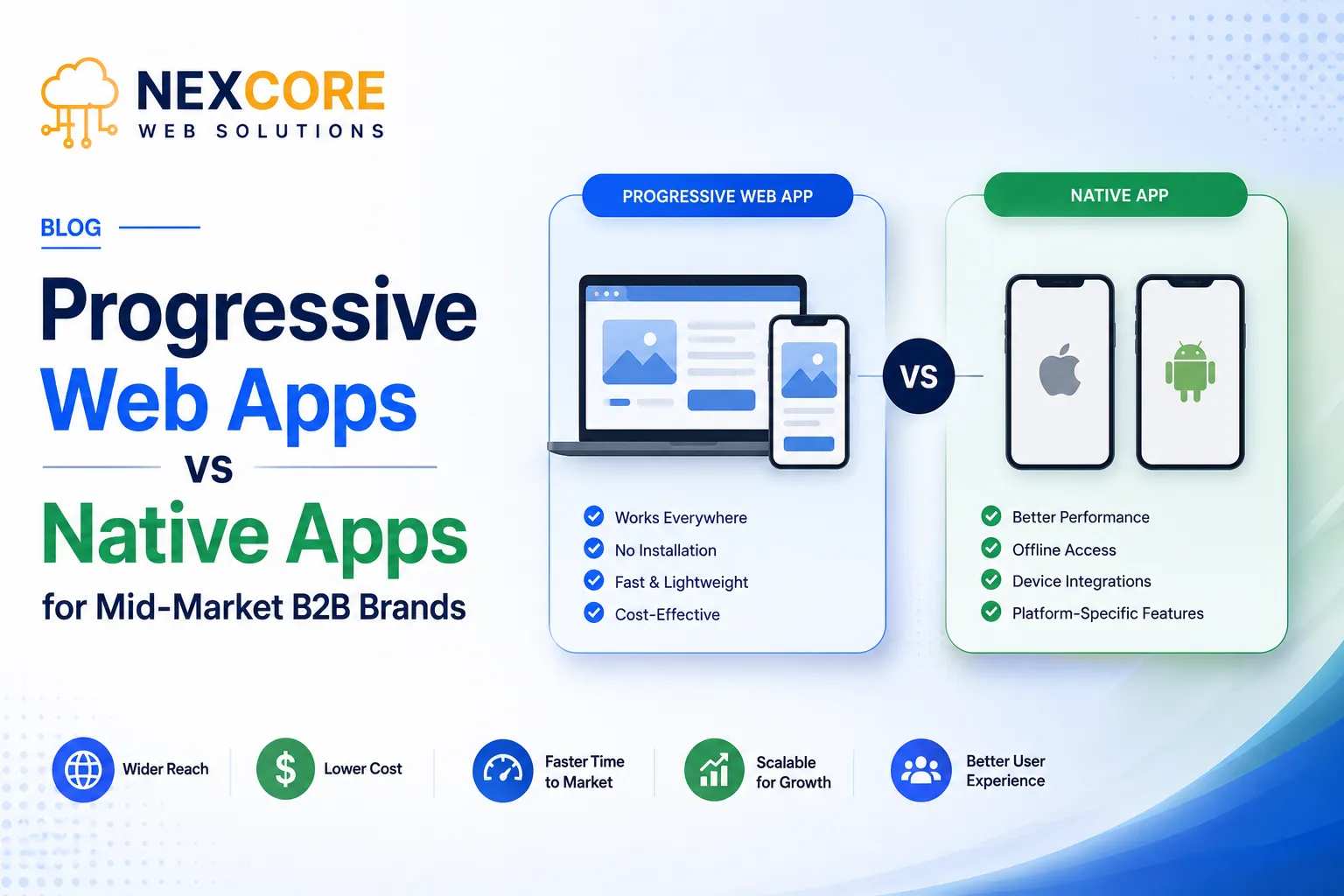
In the world of mobile app development, choosing the right framework is crucial for building high-quality, performant apps. Among the most popular frameworks for cross-platform development today are Flutter and React Native. Both have gained immense popularity for enabling developers to create apps that work seamlessly on both Android and iOS with a single codebase. However, choosing between them can be challenging, as each framework has its strengths and limitations. In this blog, we will compare Flutter and React Native to help you decide which framework is the best fit for your next mobile app project.
What Is Flutter?
Flutter is an open-source UI software development kit (SDK) created by Google. It allows developers to create natively compiled applications for mobile, web, and desktop from a single codebase. Flutter uses the Dart programming language, which is also developed by Google.
What Is React Native?
React Native is an open-source framework developed by Facebook. It allows developers to build mobile applications using JavaScript and React. React Native enables developers to use the same codebase for both Android and iOS apps, providing a fast and efficient way to create cross-platform apps.
Key Differences Between Flutter and React Native
1. Programming Language
- Flutter: Uses Dart, a language developed by Google. Dart is specifically designed to work seamlessly with Flutter, which means it can offer performance optimizations and direct access to the platform’s API.
- React Native: Uses JavaScript and React, two of the most widely used technologies in web development. If you’re already familiar with JavaScript, React Native offers an easy learning curve, as it extends the capabilities of React for mobile development.
Winner: If you’re already skilled in JavaScript and React, React Native might be a more straightforward choice. However, Flutter can provide better performance due to the optimized Dart language.
2. Performance
- Flutter: Since Flutter apps are compiled directly into native code, they generally have superior performance compared to React Native. The use of the Dart language allows Flutter to execute tasks quickly, making it ideal for apps that require high performance, such as gaming or complex animations.
- React Native: React Native uses a JavaScript bridge to communicate with native code. While this bridge makes it easier to integrate native components, it can introduce performance bottlenecks, especially for apps with complex animations or heavy computations.
Winner: Flutter has a slight edge in performance, particularly for resource-intensive apps.
3. User Interface (UI) Design
- Flutter: One of the standout features of Flutter is its customizable widgets. Flutter has its own set of pre-designed widgets, allowing for complete control over the design and layout. This means that developers can create a consistent look and feel across both platforms, without being dependent on platform-specific UI guidelines.
- React Native: React Native relies on native components for UI rendering, meaning that the app will adopt the UI design of the operating system it’s running on (iOS or Android). While React Native allows for customization, developers are somewhat limited to the design guidelines of the underlying platform.
Winner: Flutter offers more flexibility in creating custom UIs and designs, making it ideal for apps that require a unique, brand-specific experience.
4. Community Support and Popularity
- Flutter: While Flutter’s community is rapidly growing, it is relatively newer compared to React Native. However, being backed by Google and continuously improving, it has gained strong momentum among developers and businesses alike.
- React Native: React Native has a larger and more mature community, with extensive documentation, third-party libraries, and resources available for developers. Facebook’s backing also ensures that the framework continues to receive regular updates and improvements.
Winner: React Native has a larger, more established community and ecosystem, making it easier to find solutions to common problems and integrate third-party tools.
5. Development Time and Learning Curve
- Flutter: Flutter has a steeper learning curve, particularly if you are new to the Dart language. However, the framework’s extensive documentation and rich set of widgets help reduce the complexity once you get familiar with the ecosystem.
- React Native: For developers with experience in JavaScript and React, React Native offers a relatively low learning curve. It leverages the same design principles and libraries that web developers use, making the transition to mobile development easier.
Winner: React Native is easier to pick up for developers already familiar with JavaScript, while Flutter may require a bit more effort upfront due to Dart.
6. Development Tools and IDEs
- Flutter: Flutter supports a wide range of IDEs, including Android Studio, Visual Studio Code, and IntelliJ IDEA. It offers great tools for debugging, performance tracking, and building apps.
- React Native: React Native also supports various IDEs, such as Visual Studio Code, WebStorm, and Atom. React Native’s integration with the developer tools provided by Facebook also enhances the debugging process.
Winner: Both frameworks provide robust developer tools, so this point is quite comparable. Flutter has slightly more built-in features for development, while React Native offers flexibility with different development environments.
7. Integration with Native Code
- Flutter: Flutter makes it easy to integrate with existing native code, especially for Android and iOS. However, it requires developers to write platform-specific code in Dart or Kotlin/Swift if needed.
- React Native: React Native allows you to easily link native modules written in Java, Objective-C, or Swift for more complex operations. Its ability to directly interact with native code gives it an edge in projects requiring deep integration with native features.
Winner: React Native offers more seamless integration with native code due to its reliance on JavaScript, which is widely used across both mobile platforms.
When to Choose Flutter?
- If you need a highly customizable UI with consistent design across platforms.
- If performance is a top priority (e.g., for complex animations, graphics, or gaming apps).
- If you want to future-proof your app with strong backing from Google.
- If you’re willing to invest time in learning Dart and exploring the Flutter ecosystem.
When to Choose React Native?
- If you’re already experienced with JavaScript and React.
- If you want to quickly develop and deploy apps without a steep learning curve.
- If you prefer a large, mature community and a wide range of libraries and plugins.
- If your app relies heavily on native components and integrations.
Conclusion
Both Flutter and React Native are powerful cross-platform frameworks that allow you to develop high-quality apps for iOS and Android from a single codebase. Choosing the right framework ultimately depends on your app’s requirements, your team’s expertise, and your development timeline.
- If you prioritize performance, custom UI design, and a consistent experience across platforms, Flutter might be the better choice.
- If you want a quicker development cycle with JavaScript knowledge and access to a larger ecosystem, React Native could be the ideal solution.
No matter which framework you choose, both have the potential to help you create successful mobile apps.
Thank you for reading.
Best Regards,
Divyam Roy