
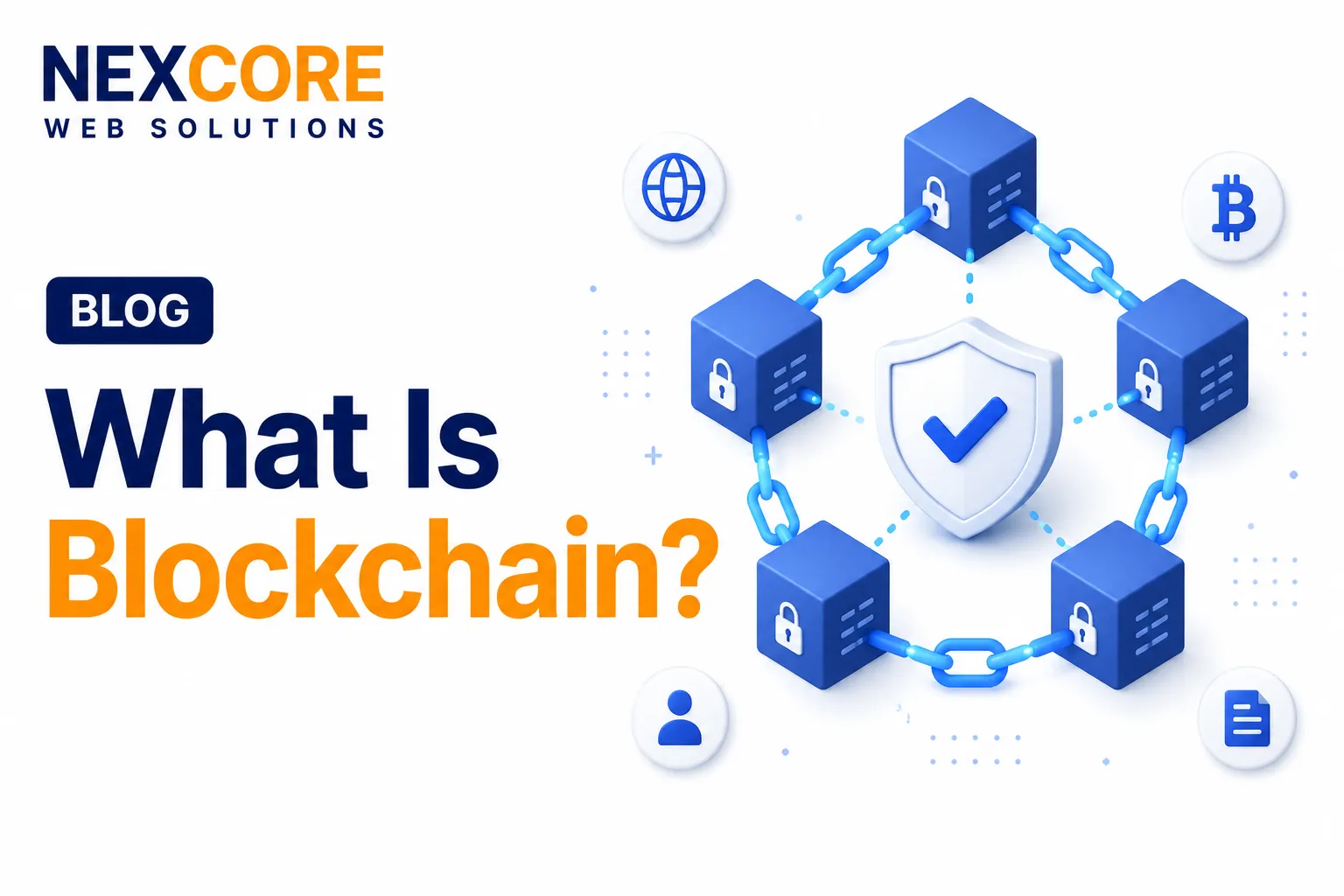
Blockchain is a technology for recording and sharing information across a network of computers in a way that makes unauthorized changes difficult to hide. It is best known as the technology behind cryptocurrencies such as Bitcoin, but its potential applications extend far beyond digital currencies. A blockchain can maintain a shared record of transactions without requiring every participant to rely on one central database administrator. Instead, network participants use agreed rules to validate and record information. Each group of records is connected to previous records using cryptographic techniques, creating a chronological chain. Understanding blockchain is useful because the technology combines distributed computing, cryptography, consensus mechanisms, and digital recordkeeping into a system designed to provide transparency, integrity, and shared control.
How Does Blockchain Work?
A blockchain is essentially a distributed digital ledger. A ledger is a record of transactions or other information, while distributed means that copies of the ledger can be maintained across multiple computers in a network. When new information is submitted, the network follows its consensus rules to determine whether the information should be accepted. Once approved, the information is recorded in a new block and linked to earlier blocks.
Understanding Blocks
A block typically contains a collection of transactions or records, along with information that connects it to the previous block. Cryptographic hashes help create this connection by producing a unique-looking digital representation of data. If information inside an earlier block is changed, its hash would generally change as well, making the alteration detectable. This structure contributes to blockchain’s tamper-evident design.
What Makes Blockchain Different?
Traditional databases are commonly controlled by a central organization or administrator. That organization determines who can access the database, modify records, and maintain backups. Blockchain networks can distribute these responsibilities among multiple participants instead. This does not mean every blockchain is completely decentralized, because different networks use different governance and access models.
Distributed Ledger
In a distributed ledger system, multiple network participants maintain copies or synchronized views of the record. When changes are accepted according to the network’s rules, participants update their records accordingly. This can reduce dependence on a single database operator and make the system more resilient to certain failures. However, distributing data can also introduce challenges involving performance, storage, governance, and coordination.
What Is a Blockchain Hash?
A hash is the output of a cryptographic function that converts input data into a fixed-format value. Even a small change in the input can produce a substantially different hash, which makes hashes useful for detecting data changes. Blockchains use hashes in several ways, including connecting blocks and supporting data integrity. Hashing itself does not make information magically unchangeable, but it makes unauthorized modifications easier to detect when the network’s structure is properly maintained.
What Is Consensus?
Blockchain networks need a method for participants to agree about which transactions or records should become part of the shared ledger. This process is known as consensus. Different blockchain networks use different consensus mechanisms, with Proof of Work and Proof of Stake being two well-known examples. Consensus rules influence security, performance, energy requirements, participation, and how new records are accepted.
Proof of Work
Proof of Work requires participants commonly called miners to perform computational work as part of the process of adding blocks. Bitcoin uses this approach to help secure its network. The computational requirement makes certain types of attacks more expensive, although Proof of Work can consume substantial amounts of electricity. Its security model is therefore closely connected to economic and computational costs.
Proof of Stake
Proof of Stake uses participants known as validators who commit or stake cryptocurrency according to the network’s rules. Validators can be selected to propose or confirm blocks, with penalties and rewards helping encourage honest behavior. Compared with Proof of Work, Proof of Stake can require substantially less direct computational energy. Its security model instead depends on economic incentives, validator behavior, and protocol rules.
Blockchain and Cryptocurrency
Cryptocurrency is one of the most prominent applications of blockchain technology. A cryptocurrency blockchain can record transfers of digital assets between addresses without relying on a traditional bank to maintain the transaction ledger. Cryptographic keys allow users to authorize transactions, while the blockchain records accepted transfers. However, blockchain and cryptocurrency are not interchangeable terms; blockchain is a technology, while cryptocurrency is one category of application built using that technology.
What Are Smart Contracts?
Smart contracts are programs deployed on certain blockchain networks that can execute predefined logic when specified conditions are met. They can support applications such as decentralized exchanges, digital asset systems, lending platforms, games, and automated agreements. A smart contract does not necessarily represent a traditional legal contract, despite its name. Its behavior is determined by code, and errors in that code can have serious consequences because blockchain transactions may be difficult to reverse.
Real-World Uses of Blockchain
Blockchain technology has been explored for applications involving supply chains, digital identity, financial settlement, asset ownership, record verification, and cross-organizational data sharing. For example, companies could use a shared ledger to record stages in a product’s journey through a supply chain. Organizations could also use blockchain-based systems to provide verifiable records without maintaining identical databases independently. Whether blockchain is appropriate depends on the specific problem and whether its advantages justify the additional complexity.
Benefits and Limitations
Blockchain can provide useful properties such as tamper-evident records, shared visibility, programmable transactions, and reduced dependence on certain intermediaries. However, it is not automatically better than a conventional database. Public blockchain networks can face scalability, transaction-cost, privacy, and performance limitations. Private networks can address some concerns but may provide fewer decentralization benefits. Developers should therefore compare blockchain with conventional architectures before selecting it for a project.
Blockchain Security and Risks
Blockchain systems can be difficult to alter after records are confirmed, but that does not mean they are immune to attacks. Vulnerabilities can exist in wallets, exchanges, smart contracts, applications, governance mechanisms, or user authentication. If private keys are stolen, an attacker may be able to authorize transactions from the associated account. Security therefore depends on the entire ecosystem rather than the blockchain ledger alone.
Conclusion
Blockchain is a distributed ledger technology that combines cryptography, network coordination, and consensus mechanisms to maintain shared records. Its structure can make unauthorized changes detectable and reduce dependence on a single authority in certain systems. Cryptocurrency remains its most recognized application, but blockchain can also support smart contracts, digital assets, supply-chain records, and other specialized use cases. At the same time, blockchain introduces trade-offs involving scalability, cost, privacy, governance, and security. The best way to evaluate it is not to assume that blockchain is automatically superior, but to examine whether its unique properties solve a genuine problem better than conventional technologies.
FAQs
1. What is blockchain in simple words?
Blockchain is a shared digital record that stores information across a network using cryptographic techniques and agreed rules for adding new records. Information is grouped into blocks, and each block is connected to previous blocks. This structure makes unauthorized changes easier to detect and can allow multiple participants to maintain a common record without relying entirely on one central database administrator.
2. Is blockchain the same as cryptocurrency?
No. Blockchain is the underlying technology, while cryptocurrency is one type of application that can use blockchain networks. Cryptocurrencies use blockchains to record transactions involving digital assets, but blockchain technology can also be used for smart contracts, supply-chain systems, digital records, and other applications. Therefore, blockchain has uses that extend beyond Bitcoin and other cryptocurrencies.
3. Why is blockchain considered secure?
Blockchain can provide strong data integrity because cryptographic hashes connect blocks and consensus mechanisms determine how records are accepted. Changing confirmed historical information can require overcoming the network’s security mechanisms. However, blockchain security is not absolute. Applications, wallets, smart contracts, private keys, and exchanges can still contain vulnerabilities that attackers may exploit.
4. What are smart contracts in blockchain?
Smart contracts are programs stored and executed on blockchain networks that perform predefined actions according to programmed conditions. They can automate transactions and support applications such as decentralized finance, digital assets, and blockchain-based games. Because their behavior depends on code, programming errors can create financial or operational risks. Smart contracts should therefore be carefully reviewed and tested before deployment.
5. Can blockchain be used without cryptocurrency?
Yes. Blockchain technology can be designed for applications that do not involve cryptocurrency as a primary purpose. Organizations can explore blockchain for shared records, supply-chain tracking, identity systems, asset verification, or inter-company data coordination. However, using blockchain simply because it is decentralized is not always appropriate. A conventional database may be cheaper, faster, and easier to operate for many use cases.




