
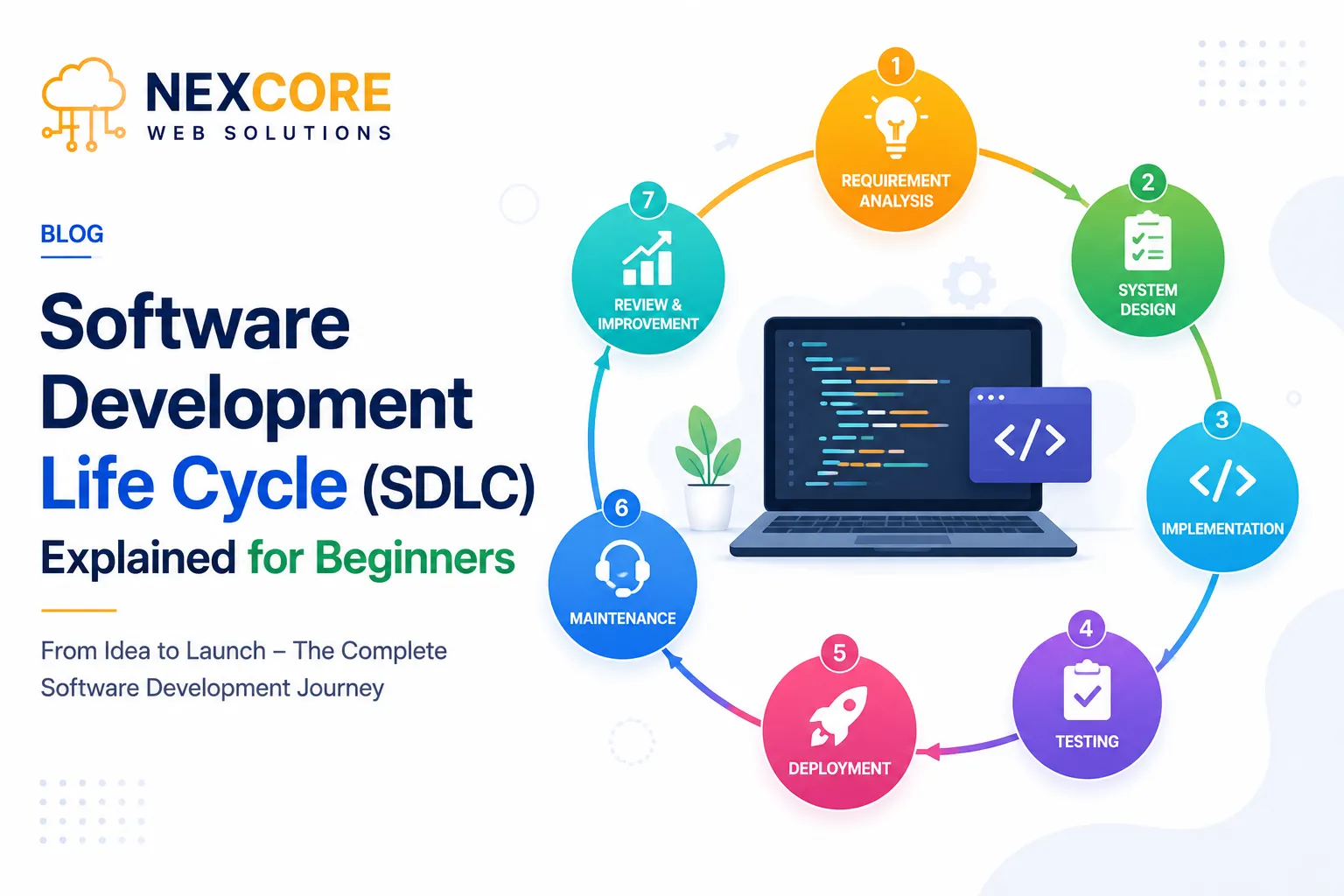
Building software is not simply about writing code and putting an application online. Successful software development requires planning, research, design, testing, deployment, and continuous improvement. The Software Development Life Cycle, commonly called SDLC, provides a structured framework that helps development teams manage these activities from an initial idea to a working product and beyond. For beginners, understanding SDLC is useful because it explains how professional software projects are organized and why developers follow specific processes before and after coding. Whether a team is building a website, mobile application, enterprise platform, or cloud service, SDLC helps reduce risks, control costs, improve quality, and keep technical work aligned with business requirements.
What Is the Software Development Life Cycle?
The Software Development Life Cycle is a systematic process used to plan, build, test, deploy, and maintain software. It divides a complex project into manageable stages so teams can understand what needs to happen at each point. Different organizations may use different SDLC models, but the underlying goal remains similar: deliver reliable software that meets defined requirements. Following a structured lifecycle also makes responsibilities, deadlines, risks, and expected outcomes easier to manage.
Main Stages of SDLC
1. Planning and Requirements Analysis
The first stage focuses on understanding the problem the software needs to solve. Stakeholders, product managers, business analysts, and developers discuss user needs, business objectives, expected features, technical limitations, and project constraints. Teams may document functional requirements, performance expectations, security needs, and regulatory considerations before development begins. Clear requirements reduce the chance of building features that users do not actually need.
2. System Design
Once requirements are understood, developers and architects decide how the software will work internally. This stage may include database design, application architecture, user interface planning, API structure, technology selection, and security controls. For example, a web application might require a React frontend, backend APIs, a relational database, authentication services, and cloud infrastructure. Good design provides developers with a technical roadmap before significant implementation work begins.
3. Development
Development is the stage most people associate with software engineering because programmers write and integrate the actual code. Developers convert approved designs and requirements into functional components, services, APIs, database operations, and interfaces. Teams typically use version control systems, code reviews, automated tests, and development environments to maintain quality while multiple people work together. Breaking large functionality into smaller tasks makes progress easier to track and reduces the risk of introducing widespread problems.
4. Testing
Testing verifies whether the software behaves as expected and identifies defects before users encounter them. Depending on the project, teams may perform unit testing, integration testing, system testing, security testing, performance testing, and usability testing. A shopping application, for example, should not only verify that a product can be purchased but also test failed payments, invalid addresses, stock changes, and duplicate requests. Effective testing focuses on realistic user scenarios rather than checking only the ideal workflow.
5. Deployment
After the software has passed required testing, it can be released to a production environment. Deployment may involve configuring servers, databases, domains, cloud infrastructure, environment variables, monitoring systems, and security controls. Many professional teams use automated deployment pipelines to move approved code through staging and production environments consistently. A controlled deployment process reduces human errors and makes it easier to roll back a release if serious problems occur.
6. Maintenance and Monitoring
Software development does not end when an application is deployed. Production systems require monitoring, bug fixes, security patches, performance improvements, dependency updates, and new functionality as user requirements change. Development teams may use logs, error tracking, analytics, and infrastructure monitoring to identify problems. Maintenance is often one of the longest phases of SDLC because successful software needs to evolve throughout its operational life.
Common SDLC Models
Waterfall Model
The Waterfall model follows a relatively sequential approach where teams complete one major phase before moving to the next. It can work well when requirements are stable, clearly documented, and unlikely to change significantly. However, discovering major problems late in the process can make changes expensive. This model is therefore less flexible than approaches designed around continuous feedback.
Agile Model
Agile development emphasizes short development cycles, frequent feedback, collaboration, and incremental delivery. Instead of building everything before receiving user feedback, teams typically deliver smaller pieces of functionality through repeated iterations. Agile methods can help organizations respond to changing requirements and market conditions. Scrum and Kanban are commonly associated with Agile software development practices.
DevOps Approach
DevOps brings development and operations practices closer together by emphasizing automation, collaboration, continuous integration, continuous delivery, monitoring, and reliable infrastructure. It helps teams shorten the distance between writing code and safely operating that code in production. DevOps does not replace SDLC stages; instead, it strengthens the way teams build, deploy, and maintain software throughout the lifecycle.
Why SDLC Matters for Beginners
Understanding SDLC helps beginners see where programming fits into the larger software engineering process. Writing code is only one part of delivering a dependable application, while requirements, architecture, testing, deployment, and maintenance can determine whether that code succeeds in practice. SDLC also teaches developers to think about users, security, performance, maintainability, and operational risks. These concepts become increasingly important as projects grow beyond small personal applications.
Common Mistakes in Software Projects
Teams can encounter problems when they skip requirements analysis, underestimate testing, ignore security, or begin development without a realistic technical plan. Another common mistake is treating deployment and maintenance as afterthoughts instead of planning for them from the beginning. Poor communication between technical and business teams can also create misunderstandings about expected functionality. A disciplined SDLC helps expose these risks earlier and gives teams opportunities to address them before they become expensive problems.
Conclusion
The Software Development Life Cycle provides a practical framework for understanding how professional software moves from an initial idea to a deployed and maintained product. Its major stages include planning, requirements analysis, design, development, testing, deployment, and maintenance, although organizations may adapt these stages to suit their projects. Different models, including Waterfall, Agile, and DevOps-oriented approaches, provide different ways to organize the work. Beginners should remember that good software development is not just about writing functional code. It is about solving the right problem, designing responsibly, testing thoroughly, deploying safely, and continuously improving the product based on real-world needs.
FAQs
1. What is SDLC in simple terms?
SDLC is a structured process used to develop and maintain software. It usually includes planning, requirements gathering, design, development, testing, deployment, and maintenance. The purpose is to organize complex software work into manageable stages and reduce risks. Following SDLC helps teams understand what they are building, how it should work, how it will be tested, and how it will be maintained after release.
2. Is SDLC only useful for large software companies?
No, SDLC principles can be useful for projects of almost any size. A beginner building a small web application may use a simplified version of the lifecycle, while an enterprise team may require detailed documentation, security reviews, automated testing, and formal deployment procedures. The process can be adapted according to project complexity, team size, budget, risk, and business requirements.
3. Which SDLC model should beginners learn first?
Beginners should understand the basic stages of SDLC before focusing heavily on a particular model. Agile is especially useful to study because many modern development teams use iterative planning, frequent feedback, and incremental delivery. However, learning Waterfall and DevOps concepts is also valuable because different organizations and projects use different approaches depending on their requirements.
4. Why is testing an important SDLC stage?
Testing helps identify functional, security, performance, compatibility, and usability problems before software reaches or affects users. Without adequate testing, seemingly small defects can cause failed transactions, data corruption, security incidents, or poor user experiences. Testing also provides confidence when developers modify existing functionality, making it easier to maintain and improve software over time.
5. Does SDLC end after software is deployed?
No, deployment is not the end of SDLC. Once software reaches production, teams must monitor its performance, fix defects, apply security updates, manage dependencies, and respond to changing user requirements. Maintenance can continue for years, especially for business-critical applications. Treating maintenance as part of the lifecycle helps organizations keep software secure, reliable, and useful as conditions change.




